There’s always a political dimension to what people do in life, says Archbishop Gallagher.

11-Diplo-Vatican-Zambia-Nov-2015

There’s always a political dimension to what people do in life, says Archbishop Gallagher.

Last November 9, 2015, Archbishop Paul Richard Gallagher, Secretary for Relations with States of the Holy See, pay a visit to Zambia to commemorate the 50th anniversary of diplomatic links between the Vatican and Zambia. A Eucharistic celebration took place at the Cathedral of Child Jesus in Lusaka followed by a reception at the Apostolic Nunciature. In his remarks, his Excellency Gallagher made an historical review of the presence of the Catholic Church in Zambia mentioning that: Next year (2016) will mark the 125th anniversary of the foundation of the first Catholic missions, established by the Missionaries of Africa (popularly known as the “White Fathers”), who arrived in district of Kasama in 1891.

Click here to see the full PDF content of the review.

Our SAP Provincial, Stanley Lubungo, was present. Members of the Choir of St. Ignatius Parish and of the “Communauté Catholique Francophone de Lusaka” led by Sonia and Michel Somwe entertained the invited guests.

My already three months’ journey at the Spiritual Formation Centre, Kasama 2015-2016

Peter Bwire Jan 2016b_modifié-1By Peter Bwire (from Kenya)

The three months have been a period to establish my inner relationship with God in the person of Christ. This has partly been achieved through prayers, actually the journey continues. I have discovered that my spiritual strength is entirely dependent on my regularity in prayer. Prayers, especially those personal ones, have become not just a routine but a necessity for the success of the day and other events. I have discovered that without a short prayer or a reflection before undertaking my day`s activities, these seem heavier if not complicated unlike when I prayed, they seem easier and sometimes I truly experience God`s intervention. I have had this experience in three areas of my formation here.

The first area is my family and life story. The guidance of my spiritual companion, reflection, meditation and pondering on my past, all this has really bared fruits; I experienced a forgiving and a healing God. I experienced a relief as the pain, resentments, memory of bitterness and guilt left my heart. This indeed was one of my personal objectives – to learn to forgive myself and other people, whom I feel, added some dirty water in the flow of my river of life.

Another area was, in my daily activities, the programme within the house and the apostolate at the hospital. Whenever I have a short reflection or prayer before I set off for mass and then the hospital, I encountered an enriching day of apostolate. Sometimes I even wondered how I managed with my limited Bemba language. At times the fears disappeared; patients were welcoming and opened up to me and shared their conditions` experiences, unlike when I rushed or even left the house without any kind of reflective or prayerful envisioning of the day. In this second case, the apostolate seemed boring, tiresome, patients looked indifferent and sometimes unwelcoming. I even contemplated leaving the apostolate before time (11: 00 am).

The last area is the significant experience of my relationship within and outside the house. In the house, I have accepted each individual’s uniqueness and therefore my approach has been that of awareness both of the self and others. Through awareness, I have at least been able to learn and understand how my brothers wish to be related to. This was also one of my personal objectives and it coincides with the community`s third objective (i.e. to build an intercultural Missionaries of Africa’s community based on the Gospel values). In my relations outside the house, I have tried to keep a lower attachment to friends and families in order to keep the balance between the kind of comfort I get from outside and within the house. I am certain that whenever I feel more comfortable outside this house than within, then I am likely to seek more life outside than within the novitiate. This can affect my formation all together. I strongly believe that this balance has worked and I am convinced that the three months have been beneficial to me both within and outside the community. My family back in Kenya may be far but more present in me together with the family within this community of the spiritual year. I therefore continue to pray to God that I may be able to hold on to him as I deepen my relationship with him and may he help me to be true till the end of novitiate and thereafter.

Three months’ spiritual journey

The clothing ceremony Mass at the spiritual formation Centre, Kasama, 2015-2016

Kasama 2015-2016 01cBy Angelous A. Kabika (from Tanzania).

Angelous A_d PNGOn the 8th December 2015, our community of Lualuo celebrated the feast of our Society. On the eve,  we had already celebrated the Silver Jubilee of Fr. Francis Bomansaan; we had a moving liturgy and his testimony at the end of the Eucharist boosted our spiritual lives. We wished him more jubilees to come. In these few lines below, I am going to focus just on the clothing ceremony which, according to the house custom, is celebrated on the same day as the feast of the society, that is, 8th December.

In an explosive Mass presided by Babaine Venerato, we were able to explore what means to put on a gandoura, rosary and burnous, what qualifies an attire to be right, and finally how ought we to aspire and inspire with our attire at the service to the African world.

Starting by sharing his experience whereby he had to put on a mechanic suit in order to help a stranded driver, he went on explaining how our right attires (gandoura, rosary and burnous) are just external symbols which stand for the internal symbol, meaning our attires should “inspire and aspire” others. It is a call to live our rightful vocation and our lives to the extent that we create positive impact on those we meet on our vocation journey. People need to see peace and contentment in us. If we always do good, we show people the way, the truth and life of holiness. “Embedded on right attires, commitment becomes a commitment, a vow becomes a vow and obedience becomes obedience”. Obviously, none of us alone can change the world but each one of us can make a difference in the life we are choosing. At least we are called to make a contribution in our community through acts of charity to one another. A simple gesture of charity can be fetching water when there is a shortage, working in the garden, cleaning around, passing on drinking at table; all those simple gestures we often ignore, yet have an impact on the community’s daily life. We have the ability actually to help one another around us before we can reach out to others. Therefore these simple acts of charity have enormous impacts on our own lives and on other peoples’ lives.

In addition, right skills and adequate information will qualify our right attires. If we are equipped with information and skills for the job we are called to do, we shall fit into the service to the African world. In other words we cannot give what we do not have. It is a call to know God’s love in our personal experiences and share this love to others. This knowledge however is personal and it is never read from books. The knowledge and skills about God’s love are extraordinary important in order to come up with what we can give to the African world.

It is from this point that Fr. Babaine touched the final question. How ought we to inspire and aspire with our right attire? How we live our right attires will be defined by availability to the job we are called to do. In other words Father Babaine invited us to be available to the service and to listen to the people we are sent to. No wonder Paul to the Romans puts it clear for us that we should weep with those who weep and rejoice with those who rejoice and finally to this we should help them (Romans 12,15).

Clothing ceremony

Some photos of the community and the teams (Spiritual Formation Centre, Kasama 2015-2016)

What an enriching experience in Namushakende! – Zambia

Jpeg

Mathew W. Banseh in Namushakende

By Mathew W. Banseh

On the 22nd December, Romaric Bationo, Alain-Christian Muhineza and I left Lusaka for Namushakende, located in Mongu diocese. On the political map of Zambia, Namushakende is a district in the Western Province. This was my first time to visit this part of Zambia which coincided with Christmas and the New Year holidays.

We travelled very well and we got the pleasure to drive through the Kafue National Park but only saw few wild animals. We greeted Bishop Evans Chinyemba on our arrival in Mongu before proceeding on our journey to our destination. We were well received with a barbecue and I was touched by the joy that animated the community.

The Catholic population is very humbling. On Christmas Eve, I saw just a few lay faithful at Mass in the main parish church. I was wondering how it must be in outstations. Asking Alfred Awogya, the Parish Priest, about the few attendance of Christians, I came to realise that this was the usual number of faithful coming to pray.

Though few in number, the hospitality and the quality of relationship is remarkable. In outstations, we always have a meal before going back to Namushakende. Though I could not speak the local language, I was invited to visit homes. I was very touched by the simple lifestyle of the people. In cities, properties are protected with walls and iron gates. But most houses I visited have no fence. Many inside rooms have no proper doors but a simple piece of cloth to prevent people from seeing inside. Houses are made out of thatch roofs. Instinctively, contrary to my confreres, I was always locking the door of the car. “Don’t worry, they were telling me, nobody will steal anything here.”

I also got the opportunity to see the Queen of the Lozi land. Being a Catholic, she invited us to celebrate Mass at her palace since she cannot, by tradition, go to church. I also went to see the place where our confreres go learning silozi when they are appointed to that part of Zambia. I discovered that the Lozi people are proud of is the Zambezi River and I was privileged to touch its water.

I really enjoyed my short stay over there and I thank our confreres for everything. Luitumezi (Thank you)!

Death announcements; the sister of Antoon Oostveen and the father of Deogratias Ngowi

Antoon_OostveenFrom Antoon Oostveen: I received Friday night the sad news that my sister, Tonny, passed away. She had just become 84 years. Though her mind was very clear and alert, her physical health had been diminishing more and more over de past years. She was the first born of 14 children and had been a very loving 2nd mum to all of us. May she now rest in peace with God.

Deogratias-Ngowi-2014From Luigi Morell: Dear Confreres, this is to inform that we received the news that the father of Fr Deogratias Ngowi died on the 9th January in the hospital at Moshi. He will travel to Tanzania on Monday. The burial is expected to take place on Wednesday or Thursday near Moshi, where the family plot is. Deo’s father was hospitalised a few days ago. They found the sugar level quite high and he was confused. They managed to lower the sugar level to the usual level, but the situation did not improve. So other tests were taken. But his condition deteriorated and died around 16:00. He was 77 years old. Deogratias plans to be away until 4th February.

The M.S.O.L.A. invitation on the feast of the Epiphany

M.S.O.L.A. Ephiphany 2016 02bThe full family of the Missionaries of Africa in Lusaka, Sisters, Brothers and Fathers, gathered in the chapel of the M.S.O.L.A. on the feast of the Epiphany on the 6th January 2016. Followed an abundant meal and some drinks to ease the thirst of everyone on a very hot day. Prayer, sharing and gathering made that day special. Thanks to the M.S.O.L.A. for their warm invitation.

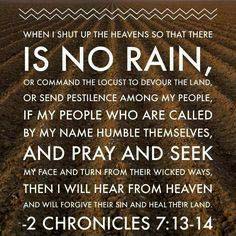
“NO RAIN!”

NO RAINSouthern Africa countries are experiencing a worried time as the rain pattern has been disrupted. Except few showers more than three weeks ago, since then, NO RAIN! Venerato Babaine is sharing his thoughts about it. Feel free to add your own thinking.

“NO RAIN!” Our mother earth is exhausted, tired and depleted. The human beings and their fellow neighbours; animals and insects have eaten all grass and cut most trees, AND POISONED WATERS. Our mother earth is suffocated by carbon, garbage, drained wetlands and pit lands. She normally would co-operate with aunt sky and uncle wind to make rain and send it to us.

Mothers are never angry to the extent of punishing children; she is just exhausted. We need to care for her so that she can care for us. The Bemba say; “Mayo mpaapa: naine nkakupaapa”, meaning; “mother care for me dearly, I will care for you in your old age.” Humanity and his fellow animals, insects and fish have turned to eat-up the mother who brought them to maturity, cared for and has been sustaining them. C’est la vérité!

2015 SAP Province Blog – Annual Report from WordPress.com

Review SAP Blog 2015 00SAP Blog started three years ago. WordPress.com is offering us today the highlights of 2015. The concert hall at the Sydney Opera House holds 2,700 people. This blog was viewed about 30,000 times in 2015 (33,372 times to be exact). If it were a concert at Sydney Opera House, it would take about 11 sold-out performances for that many people to see it. There were 1002 pictures uploaded, taking up a total of 289 MB. That’s about 3 pictures per day. The busiest day of the year was January 16th with 355 views. The most popular post that day was ‘Tragic death of Bishop Rt. Rev. Joseph Mkasa Zuza in Mzuzu, Malawi.’In 2015, there were 204 new posts, growing the total archive of the blog to 823 posts. Among them, the following attracted quite of lot of attraction in 2015: Collection of a 1000 Chewa proverbs, Zambia on April, Some news of Jean-Louis Godinot (Mpundu) who was attacked by a crocodile in December 2014 in January and Warm greetings from Kabwe, ordination of Humphrey Mukuka, June 2015 in July. SAP BLOG CHART 2012 - 2015The number of visitors increased a lot through the SAP Facebook page (https://www.facebook.com/mafrsaprovince/?ref=hl). Most of them came from The United States, Zambia and European Union though SAP Blog was seen in 144 countries in all! These were our 5 most active commenters: John Itaru, Jean Amour Tanoh, Adrien Sawadogo, Calvalho Assamo and Camille Konkobo. The number of views is increasing by 5000 each year. Let us hope that we will get up to 35,000 by the end of 2016. SAP Blog is always eager to hear from you. Bring your own story on board!

MIMSAF Calendar – January 2016

2016-MIMSAF-Calendar-4a2016 MIMSAF Calendar 5 copie

Christianity in the Luangwa Valley, by Bernhard Udelhoven

A Luangwa-cover-JPEGChristianity in the Luangwa Valley, by Bernhard Udelhoven

Where faith and culture meet of don’t meet.

What does the Christian faith offer to people in the remote Luangwa Valley of Zambia? How does it link up, of not link up, with their values, life-experience and knowledge of God and the unseen world?

The first Catholic missionaries opened a mission station in the Luangwa Valley in 1904, but they left the valley barely seven months later. They had found greener pastures elsewhere. Within the next 100 years of evangelisation, the valley had witnessed periods of renewed impetus, but the social, cultural and religious coordinates of people in the valley found only few considerations in the pastoral plans of the established Church. For many pastoral workers, the valley was conceived as a difficult place, backwards, and left behind.

Now people of the valley are themselves asking questions to the Church. The answers given to their questions should be significant for the approach to Christian evangelisation far beyond the valley.

This study into the significant social and religious coordinates of people in the valley was commissioned by the Catholic Diocese of Chipata in search for a contextualised pastoral approach.

FENZA Publications, 252 pages, 2015. (First publication in 2007)

Page 33 of 116

Powered by WordPress & Theme by Anders Norén