Increased Interest Rates amidst Rising Inflation Worrying. JCTR ZAMBIA Press Release 11th November, 2015

JCTR Website LogoThe Central Statistical Office in its October press release announced an increase in inflation of 6.6 percentage points. The October inflation of 14.3 percent is almost double the September inflation of 7.7 percent. The sharp increased has been blamed on the depreciating Kwacha. To many Zambians, the increase is not a surprise but a confirmation of the escalating commodity prices most of which have more than doubled in the last few weeks.

The October Basic Needs Basket for a family of five living in Lusaka as measured by the Jesuit Centre for Theological Reflection (JCTR) exhibited a very similar trend reflecting an increase of K302.1 from K3, 957.46 in September to K4, 249.56. Costs contributing to this was almost all of the food commodities (i.e. 12 out of the 15 food items had seen a rise in cost, the highest being that of Kapenta that saw a K50 increase). In comparison to the Lusaka October 2014 BNB (which stood at K3, 635.83) there has been a rise of over K600 (16.8% increase). It is also the first time that the Lusaka Basic Needs Basket has breached the K4, 000 barrier and thus a cause for concern to JCTR. This development is of great concern especially that the depreciation of the Kwacha continues unabated. The continued deficit in energy supply and the resultant decline in productivity will make recovery in cost of living even more difficult.  

In response to the rising inflation Bank of Zambia has raised the policy rate from 12.5 percent to 15.5 percent and also lifted the cap on lending rates by commercial banks. This monetary policy instrument is meant to curb the rising inflation and keep it within the single digit target for the year.  This raises one key concern in the midst of rising cost of doing business and declining productivity. While the policy may slow down inflation in the short run, it may further stifle productivity as investors hold back their investment due to increased cost of credit. Reduced productivity may in turn result in inflation through reduced supply of commodities. The Bank of Zambia should therefore balance well the need for low inflation and sustaining productivity. The move to raise interest rates will also hurt individuals with personal loans that have flexible interest rates as they will be required to repay their loans at the new rates. 

At a time of crisis like this the JCTR urges government to combine well its policy response to the current economic situation and not always trying to find quick fixes. Recently Government offloaded its reserves on to the market to protect the Kwacha from further depreciation but the Kwacha continues to depreciate and is currently trading at 14.02 (as noted on BoZ website). While these measures may yield temporal relief by way of dealing with the symptom of the problem and not the cause, Government needs to look at the bigger picture by devising long term solutions that lie in diversifying the economy. Raising of interest rate does not seem to be a good recipe for this long term approach to addressing the country’s current economic challenges such as improving value addition and growing our manufacturing industry.

Mafrwestafrica – Lettre du 6 novembre 2015

cropped-mafrwestafrica-02.jpgAujourd’hui, les Missionnaires d’Afrique de l’Ouest vous proposent de visiter de nouvelles pages sur leur site www.mafrwestafrica.net :

Dans la rubrique « Actualités » :

« Le rapport final du synode sur la famille » tel que présenté sur le site du journal « La Croix » avec possibilité de le télécharger (lire la suite)

Dans la rubrique « Témoignages » :

« Action de grâce de Simplice Traore » le père Simplice Traore, originaire du Mali, ordonné le 11 juillet, a célébré dans son village natal sa messe d’action de grâce. (lire la suite) 

« 20 nouveaux novices à Samagan ». C’est le 24 octobre que 20 jeunes de différents pays sont entrés solennellement dans leur année spirituelle par la prise d’habit, près de Bobo-Dioulasso (lire la suite) 

« La fête à Zinder ». Dans cette ville à l’est du Niger, dont la mission avait été incendiée, les catholiques ont célébré dans la joie la fin de leur année jubilaire. (lire la suite) 

« L’Afrique d’Est en Ouest » un texte du Père Gérard Chabanon, ancien supérieur général, et qui est maintenant en mission en Ouganda. (lire la suite) 

Dans la rubrique « Dialogue interreligieux » :

« Le Pape et le dialogue interreligieux » : pour les 50 ans de « Nostra aetate », l’audience du Pape sera interreligieuse. Déjà dans « Evangelii gaudium », l’aspect dialogue était bien présent. (lire la suite) 

« Islam et non-violence » : le témoignage de deux musulmans, et un texte sur une idée prometteuse en Belgique. (lire la suite) 

Dans la rubrique « Justice et Paix » : 

« Le monde change malgré tout » Trois exemples sont donnés qui vont dans ce sens : une déclaration du cardinal Tauran, la remise du prix Sakharov au blogueur saoudien, le Maroc en évolution. (lire la suite)

Dans la rubrique « Vu au sud, vu du sud » :

« Petits enfants en Mauritanie » une Sœur Missionnaire de ND d’Afrique partage son expérience en Mauritanie auprès des enfants les plus pauvres. (lire la suite)

Death of the brother of Brother René Garand, M.Afr

René-Garand-2014 JPGDear confreres,

I like to inform you that my brother Michel Garand pass away at Victoriaville Canada on 5th November 2015. He has been suffering of a cancer since many months, he was 73 years old. His wife died also of a cancer two years ago when I was on home leave he has four children, three boys and one girl. I do not know yet when the funeral will be?

Please remember him in your prayers, Bro René Garand, M.Afr

“I was a stranger and …” Mat. 25, 35. Ressano-Garcia railway station in Mozambique.

By Jean-Pierre Le Scour, M.Afr

Ressano-Garcia railway stationOn Friday 15th May 2015, I was standing on the platform of the Ressano-Garcia railway station waiting for a very special train coming from South Africa which was foreseen to cross the border at 08:00. It finally arrived at 12:30 carrying 420 Mozambicans, mostly youth with no other possessions than their clothes. About 50 South-African Police were manning the train. Twice as many, including Immigration Officers, were on the Mozambican side. A South-African helicopter was flying over our heads to supervise the proceedings. Everything went well.

The “victims of xenophobia” (name given to these people by the local population) were made to sit on the floor in groups of 50. They were immediately dispatched to 7 buses and 4 railway carriages that had been waiting since early morning.

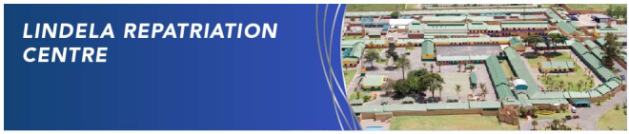
Bosasa Lindela Repatriation CentreWhat was their crime? They were simply caught by the new South-African law by which men-hostels and flats are systematically searched, preferably in the middle of the night, to arrest any undocumented person. They were then sent to the Lindela Transit Holding Centre before being escorted to the nearest border post. These work-seekers are treated like criminals in the name of security. This is a futile and expensive exercise because, as far as Mozambicans are concerned, they can go back at will to South Africa since the border is so porous.

zimbabweans-in-south-africaWhat is more disturbing is the general feeling. In spite of official denial, foreigners, even businessmen, are not wanted anymore in South Africa.

It is time for us Christians to stand up and claim with the Freedom Charter that “South Africa belongs to all who live in it”. This can be applied to anyone because there is a little bit of a foreigner in each one of us. We need to uphold the Biblical Tradition found in Leviticus 19, 33: “Do not ill-treat foreigners who are living in your land, treat them as you would a fellow-Israelite and love them as you love yourself. Remember that you were once foreigners in the land of Egypt. I am the Lord your God”.

NO TO XENOPHOBIA –  NO TO RACISM – NO TO FORCED REPATRIATION

Lungu’s church a joke – Mpundu

Lungu's church a joke - Mpundu 01By Fridah Nkonde, 01 Nov, 2015

ARCHBISHOP of Lusaka Telesphore Mpundu says President Edgar Lungu’s construction of the New Tabernacle National House of Prayer is a joke. In an interview, Archbishop Mpundu said the interdenominational church being constructed by the government in Lusaka’s Woodlands area would remain a white elephant. From front page “This is a secular society, not a theocracy. A theocracy means politics and religion are one and the same. Here is a government coming up and trying to build something interdenominational. Now, what about those who are not Christians? Because when you are talking about denomination, you are talking about Christian denominations, so the Hindus, the Muslims, the non-believers are excluded,” he said. “It is a joke for this interdenominational whatever building…It will be a white elephant. We have our own churches. I don’t want to go and worship at the Anglican Church, unless I am going there for a function. I am Catholic and I go to the Catholic Church. Now you build something and you say, ‘Okay, come to pray here’, they have no right to tell us where to pray.” George-Thelesphore Mpundu 2015Archbishop Mpundu said politicians must stick to their calling and not stray into priestly duties. “This is not their domain, their domain is politics. But let them go ahead, it is their prerogative, although it will be a white elephant and I won’t go there anyway, unless there is something like a funeral and then there will be a service of some kind,” he said. Archbishop Mpundu said the government could have used the money for other things. “If it is a funeral, for us we take the body to the church and we do not have a service, we have mass, a requiem mass. Let the government go ahead, they have the money to do that, maybe they could have used the money better but to me, it will be a white elephant. Why are they building it? I don’t even know. We just ignore the thing. It doesn’t concern us. It will be a white elephant…,” he said. Archbishop Mpundu wondered if the government was trying to build a venue for state functions. “I don’t know why it is being built but maybe they want something to use for some functions, but they don’t need something like that. If the place is not big enough, they can go to the Showgrounds like what we had the other day. And personally, I think it was some kind of a circus for the State to declare when we should be praying and fasting because during lent, we have 40 days of prayer and fasting. Now someone should come and say ‘let us pray and fast’? That is not their realm. Even if they had invited me, I wouldn’t have gone because that day, I was at St Ignatius praying,” he said. Meanwhile, Archbishop Mpundu said the Catholic Church had the right to pass moral judgment on the government. He said if people were poor, not free and did not have enough food, education, the church needed to speak out. “The Catholic Church is free to speak about that. Even though our core business is to proclaim the gospel, we have a duty to speak out on issues that affect the people,” Archbishop Mpundu said. And commenting on President Edgar Lungu’s statement that the best candidate in the 2016 general elections should win on a clean slate, Archbishop Mpundu said people will be able to make a moral judgment on who to vote for next year.  “I wouldn’t know what he meant when he said a clean slate. You go there as a presidential candidate and people judge you by your ability, your track record. We do not choose individuals. We are going to elect people we think… because sometimes we think they are going to perform and they don’t perform. It is the judgment of the people. I can make moral judgment myself that comes from policies which a particular administration makes. I am obliged to make that kind of judgment myself,” said Archbishop Mpundu.

Here the PDF file of this article.

Stagiaires in Zambia – October 2015

By Innocent Matata Foto,

The stagiaires appointed to Zambia met with Venerato Babaine, the Delegate Superior, in FENZA on Thursday 22, 2015 to evaluate the language course in iciBemba and Cinyaja they have received. The four stagiaires gave also their appreciation about their stay and promised to send a written report to Father Babaine and FENZA. At the meeting were: Patient Mushagalusa Cimanuka going to Kabwata-Lusaka, Innocent Matata Foto going to Lumimba, Kamil Szostak going to Kasamba and Innocent Majune Iranzi going to Serenje.

Stagiaires-SAP-Zam-2015

Forthcoming Oath and Diaconate in Merrivale, South Africa

From the Media Team of Merrivale, South Africa

Dear brothers, at the end of this missionary month, it is with great joy that as Media Team of Merrivale Formation House in South Africa, announce and invite you to the Oath and Diaconate ordination of our six brothers. Kindly join us or unite with us in prayer. Happy all Saint Day to all and the mission continue together with Jesus.

Chers frères, à la fin de ce mois missionnaire, la maison de Formation de Merrivale vous annonce et vous invite au serment missionnaire et aux ordinations diaconales de six de leurs frères. Associez-vous à nous dans la célébration de leur engagement. Bonne fête de tous les Saints et que la mission avec Jésus continue. 

Oath diaconate SA 2015To be ordained: Tanzanian Milanzi Konrad Simon, Burkinabe Kondemodre Albert, Rwandese Byishimo Alphonse Marie, Zambian Simbeye Robbin, Ugandan Damian Ahimbisibwe and Kenyan Ogato Douglas Momanyi.

Dates: Oath on the 27th November and the Diaconate on the following day at St. Raphael Catholic Church KwaMzimba

Trafficking in Human Beings, Particularly Women and Children at the Border of Mozambique and South Africa

Jean-Pierre Le ScourBy Jean-Pierre Le Scour, October 2015. Six months’ progress report on the Moçamibique / RSA Border.

THE BORDER

As you may know, the control of the 68 kms border between Ressano-Garcia and Mbuzini has been given to the South African Defence Force who this replaced the South African Police Forces. These soldiers are based in Macadamia Camp near Naas (Kwa Maquekeza) where most of the people trafficked from Moçambique pass through the local taxi rank.  It would be easy to control and check this place and block the traffickers and their taxis … but is there a will from the competent authorities to do so?

Ressano-GarciaThrough the Border Post of Ressano-Garcia an average of 800 men, 300 women and 10 children cross illegally every month. What was reported to me, and verified visually, is that women pass very often with very young babies, sometimes only a few months old, and young children who are not their own. Children have been seen running away but they are coerced (forced) into crossing the Border. Since 1 September 2015, new Border crossing regulations allow only the children to cross the Border with both parents and an original birth certificate.

Trafficking or smuggling people has become a business at the Border. On the Moçambican side, you have the “Gatunos” a semi-organised group of youngsters, the “Community Police” with a red arm band, local police and Border Guards. From RSA, the “Matsinyane” taxi operators from Naas, SADF and “Ninjas”. All these people are looking for money. If you do not pay, you are beaten up, robbed and might land up in a police station at Ressano-Garcia or Komatipoort. If you pay your way, you pass without any problem even without travel documents. If the “traveller” resists his little money, possessions and always cell phones are taken away from him by violent means.

The month of September has been marked by an increase in the number of children disappearing, age range between 8 and 14 years. One of them was able to fight off the aggressor but was hit with a broken bottle in the race and received 8 stitches. I have organised a workshop in all the schools about the dangers of living in a small border town and given a course in self-defence to a few volunteers.

Forced repatriation from South Africa to Moçambique continues unabated with an erratic time-table which makes it difficult to organise basic help to these returnees. One of the biggest repatriations was on 15 May 2015 with about 500 persons on board a train. Subsequently, the authorities seem to prefer to use busses. Two or three times a month up to 10 busses cross the Borders without stopping and dump their “human load” at the Border Guards’ barracks where they are being lectured on what will happen to them if they ever try to cross to South Africa again. Then they are told to go … every time at the railway station or at the barracks of the Border Guards it is discovered that a few of these returnees are not Moçambican at all.

MEETINGS

Regular meetings are organised at the Border with the “Commisāo Mixta”:  it regroups border guards from both countries, police, immigration, ONG, Catholic Church. This meeting reports on cases of trafficking, border violations, mistreatment of repatriated people and manner of repatriation. At the last meeting at the end of August we were informed of the new Regulations concerning the crossing of minor children (under 18 years of age).

Following my latest reports, good contacts have been established with the CTIPC (Counter Trafficking In Persons Office). A meeting has been set down for 10:30 on the 5 October 2015 at Khanya House to meet with a delegation from the Vatican. Workshops are being conducted in the Nkomazi District as well as in Moçambique.

TRAFFICKING OF CHILDREN FOR ORGAN REMOVAL

The sale of human organs from Moçambique to South Africa continues and with the increase of children disappearing, it is a very worrying trend. A few years ago, a Brazilian Sister (Doraci Edinger, 53, a Sister of the Servants of Mary Immaculate) was murdered in Nampula for denouncing that practice. On 8 September 2015, an albino child was sold by his parents in Nampula – cases that surface are only the tip of the iceberg. A friend of mine, who works at Customs, told me that he intercepted, at the Border, a man who was carrying a bottle full of human genitals. Since the economic situation is very precarious and two-thirds of the country are affected by drought, we are likely to see an increase in the trafficking of young children for any purpose but mostly economical. We can as well question the demand for “muti” (remedies) with a component of body parts, mostly from albinos. Government ONG and Churches should be able to embark on a campaign to destroy these false beliefs. If they do it about the rhinoceros horns, they could do it as well in order to save fellow human beings.

ACTIONS TAKEN

Poster campaign for young girls who want out of the system and to warn them about the risk of being trafficked.

– More than 2000 (Africa Unite – say no to xenophobia – Prayer for Peace) tokens have been distributed everywhere: Border post, schools, administration, Parishes. Thanks to Michel Meunier, M.Afr

– Two places of safety continue to work both sides of the Border.

– Parents’ meetings are organised at various schools to ask them to care more for their children, tell them not to accept lifts or sweets from strangers, not to walk to and from school alone.

– The “CommisāoMixta” demands the application of the law in South Africa to punish severely trafficking in human beings and recommends net-working between Moçambique and South Africa between organisations concerned, Churches and Government instances.

– One member of the “CommisāoMixta” repatriates regularly, to their country of origin, girls who have been trafficked and children who have been abducted.

– The “Escola Esperança” in Ressano-Garcia is welcoming underprivileged children, orphans and children with difficulties without distinction of race, creed and gender – Christian and Muslim children learn to live in peace and harmony.

– A place at the Komatipoort Airfield has been identified as a stop-over for truckers. The manager of the land distribution office is in favour. It would be a take-away restaurant with an ablution block where activists could work on the truck drivers. We now wait for financing and personnel through the CTIP.

CONCLUSION

All these activities are but a drop in the ocean, but the writer takes the greatest encouragement from our leader, Pope Francisco, who puts the plea of the migrants and the trafficked people at the centre of our Pastoral duties, and shows by his action and words how much he cares. And official of IOM has underlined in his own words the urgency of this Pastoral care: “The most hidden aspect of this trade in bodies, regardless of origin or gender or purpose of the trade, is that within these bodies, reside human beings with hopes, dreams emotions and ambitions – and even a sense of justice; justice which so often eludes them with it matters most”. 

Read the translation into Spanish: El infame tráfico de seres humanos entre Mozambique y Sudáfrica

PDF file: Trafficking in Human Beings, Particularly Women and Children at the Border of Mozambique and South Africa

The youth leaving the Catholic Church in Zambia

Jean_Baptiste_TodjroBy Jean-Baptiste Todjiro, former stagiaire in Zambia, currently in Theology in South Africa.

Back to January 2012, the Sector Assembly in Zambia came up with the following questions; “Why the Catholic youth are leaving the Catholic Church? How can we respond to it as a Missionary Society?” Those questions were also discussed among pastoral animators at the Archdiocese of Lusaka. Youths from different parishes were similarly commissioned to reflect about them. Moreover, at the Lusaka South Deanery level, youth animators and youth coordinators were complaining about the dawnfall of the youths at St. Lawrence Parish, Lusaka.

A questionnaire drafted by Fr. Bernhard Udelhoven was shared among the youths. With the exception of Western Deanery, they unfortunately expressed little interest.

To come to a better understanding, I visited three other churches around our Parish so as to compare the behaviour of the youth towards church activities. It transpired that it is an overall problem among all Churches. A pastor once said; “We do a lot to get youths to our Church from all other Churches. But, as for keeping them for good, it is a real challenge and little is done towards that.”

Perception of the problem by different Churches.

I approached some Pastors in the hope of getting in touch with their youths.  However, I was perceived as someone looking for ways to pull youths from them. But some families who were concerned about the future of their youth welcomed the idea. I therefore met the Boys and Girls Brigade from the United Church of Zambia (UCZ), the youth of a Pentecostal Church namely “Issachar Church of Love” and the youth of the Catholic Church.

For many Catholics, the migration to other Churches is perceived like ‘hunting’ from other Churches while other Churches perceive the fact that their youth are leaving as an act of maturity or revolt. For the Pentecostal, the situation is not alarming. For the Boys and Girls Brigade of UCZ, the leaders realized that many young people are dropping or engage themselves in bad behaviours. Few boys and girls go through the full length of their formation program.

Some findings.

A) Ignorance of the Catholic faith: most people who left the Church claimed they lived their Catholic faith in ignorance. For many, the teaching of the Church seemed difficult to understand.

B) Challenge on knowledge of biblical texts: there was no real challenge from other Churches apart from the knowledge of biblical texts.

C) Few programs on faith for the Youth: there are very few programs that can help the youths to discover their faith and how to articulate it.

D) Lack of seriousness towards youth ministry: there is a lack of seriousness towards youth ministry.

E) Inadequate formation: There is inadequate formation during the catechism time to face the different challenges brought up by different Churches.

F) Act of maturity: leaving the Church can be understand as an act of maturity or discovery.

G) Peer Pressure: our youths join other Churches without much understanding of the church they want to go. Better financial support for youth activities in those Churches attract them.

H) Marriages: many youths leave the Catholic Church in search of husbands or wives because they believe most of the ladies or men from our Church are not serious towards each other.

I) Lack of Employment: Some youths leave our Church to join other Churches where they are promised employment.

Our initiations and ongoing formation to Christian life.

Among the reasons that pushed many youths away from the Catholic Church is the ability to express their faith in different forums and encounters. However, we need to take into consideration that all Catholics are affected by this. Nowadays, we live in a mixed society where we share our daily activities with other denominations.

Our catechism classes.

If the Church acknowledges the importance of infant baptism, there is a serious call today to look at what we offer in preparation to receive the first communion. We seem to do better to prepare them for the sacrament of confirmation even though some are confirmed very young without a real understanding of what the Catholic faith is. As a result, many fail to answer simple questions about their faith.

Ongoing formation after catechism classes: is it enough to baptise and to confirm?

Many youths find no follow up after their catechism classes and slowly desert the Catholic Church for other Churches where they feel to be listened to. They are taught how to pray spontaneously. They are taught how to formulate their prayer intentions from deep within themselves whereby their can express their emotions.

Therefore, what do we offer to the youths after baptism and confirmation to help them to deepen their faith? Are they only singing with conviction at Mass or at choir festivals?

There is a cry today from youth to integrate their faith with daily activities and new ventures while coping with social pressure.

Lack of parental support and guidance.

Only a few parents are interested in the formation of their children. The family unit as a place of education is missing. Little is done at home to help them to grow and mature their faith.

– The role of god-parents: they are chosen among the faithful to accompany newly baptised and new catechumen on their life of faith and social life. I wonder how many understand their role and how seriously they take it. Some are not even known by or in contact anymore with the god-child. Some god-parents have a large number of god-children every year. Do they have time to visit them at least once a year?

Lack of care by the authorities: youths seem to be left alone. The care from Church’s authorities seems to be missing which brings a feeling of being considered less important. To this effect, youths are easily asked to cancel their activities, even though planned for months, because of an event at parish level judged to be more important.

– Fear of the parents: meetings are held separately with the youth because of a cultural tradition where they can’t express their views in front of their parents and elders. Consequently, there is little space to integrate youths in decision making process.

Leaving the churches as an act of revolt or an act of maturity.

A visit to a UCZ family offered me an opportunity to see how this family unit lives in harmony despite the fact that the members go to different churches. The husband was a Catholic but joined his wife to pray at the UCZ. Two of their daughters go to different churches. One is Catholic and the other one is a Jehovah Witness. The last three are still praying with the parents at UCZ.

The parents consider the choice of their children as an act of maturity and a constant search for Gods’ call. All children are respected and supported when faced with challenges. The daughter who goes to the Catholic Church wants to join sisterhood. The other daughter became a Jehovah Witnesses because of her marriage.

A former seminarian told me that he was very spiritual when he joined the seminary but could not fit. Today, he is a leader in one of the new Episcopal Pentecost Churches. He believes that Catholic leaders are keeping too much from the faithful. According to him, people should be educate in prayer life and be allowed to express their talents.

How attentive are we towards people’s spiritual growth? Even without any theological studies, can our youths express themselves whether in prayer or in any other activity?

The saddest part of all my encounters was with those who left the Catholic Church as an act of revolt because of personal grudges with a leader or someone in authority. Many youth claim they were not really cared for in time of sickness, funeral and other life events. Sickness constitutes one of the main factors whereby many search for a miracle. Prayers from Pentecostal Pastors where they are promised to be cured and to become healthy are very attractive. A visit to one of our former altar boys shows how deep rooted these Pentecostal prayers are and how people are in despair for them. At Samson’s place, I found him with five of his friends praying passionately for more than an hour. How do we answer this thirst of spirituality of our youth who are nurtured by other Churches?

Many youths today remain at home as they feel out of place or not accepted by their fellow youths because of different events of life such as pregnancy and marriages. Others left the Church because of certain rules related to the age one should be an altar boy or part of ‘holy childhood’.

Our liturgical celebration.

Some who left the Catholic Church complain that our celebrations are boring, repetitive and at times too long. They questioned the interpretation of the biblical text. They feel the interpretation of the bible is too restrictive and that they should be given room to interpret what they feel or understand of the text. 

Conclusion.

All along my pastoral experience with the youths, including those who feel out of place, I tried to understand this phenomena. Some youths are simply in search of social activities while others look for adult’s presence, support and care.

Recommendations.

  • Visitations to youths during their various activities and those facing serious challenges in their families.
  • To support the growth of spiritual life within families as a way to integrate our pastoral care for the youth.
  • Participation in their spiritual and social activities.
  • Better understanding of the role or duties of god-parents.
  • Reviewing our catechism program and organise ongoing formation about our Catholic faith and the social teaching of the Church.
  • Strengthening the youth groups by allowing them to take an active participation in different activities. Leaders should not be doing things for them, instead they should be doing it with them.

Zambia Are Youths Splitting ChurchesClick here to read also an article published in the Times of Zambia on the same topic.

ZAMBIA: Don’t Solely Depend on Prayers to Respond to Economic Hardships, says Bishop Moses Hamungole of Monze

ZAMBIA: Don’t Solely Depend on Prayers to Respond to Economic Hardships, says Bishop

by CISA-NEWSAFRICA  Lusaka October 27, 2015(CISA)

http://www.cisanewsafrica.com/zambia-dont-solely-depend-on-prayers-to-respond-to-economic-hardships-says-bishop/

Bishop Moses Hamungole of Monze copieBishop Moses Hamungole of Monze Catholic Dioceses says Zambians “should not just depend on prayers but must also work hard to respond to the economic hardships the country is facing.”

In an interview after he opened Gwembe parish on October 25, Bishop Hamungole said “no matter how many times Zambians will cry and shout to God for help to improve the country’s economy, their prayers will yield nothing in the absence of hard work.”

“For prayer to yield results, it has to go with action,” Bishop Hamungole told Zambia’s The Post Newspaper.

On October 18, Zambians took part in a national day of prayer seeking divine help for the country’s economic woes following a collapse in global copper prices after an appeal from President Edgar Lungu churches across the southern African nation religious leaders.

He said people should not expect kwacha-the Zambian currency to improve any time soon when they have not done anything to respond to some of the causes of its poor performance.

Bishop Hamungole felt it was unfortunate that the country lacked leaders who are innovative and dedicated to hard work and improvement of people’s welfare.

“God does not help people who just sit without doing anything to change their situation and this is what is currently obtaining on the ground. How do people expect to come out of this mess when we are not producing anything for export? Crying and shouting to God alone is not enough, but hard work and change of attitude,” he said.

Page 37 of 116

Powered by WordPress & Theme by Anders Norén