Missionary Oath in Jerusalem

Missionary Oath invitation Card Jerusalem 06 (2)The Missionary Oath of Bonaventure Bwanakweli, Emmanuel Mubanga Chisanga, Fredrick Limo Ng’etich and Vincent Kyererezi will take place in Jerusalem on Tuesday the 30th April 2013 at 17:00 hours in Saint Anne’s Basilica.
We as the SAP are proud of all of you.
May the good Lord bless this day always and make it a memorable day for your missionary journeys.
United in prayer.
Christopher Chileshe, SAP Provincial

Sad news about the health of Clement Alekwe

Clement_AlekweOur confrere , who was part of the Lua-Luo noviciate in Kasama last year, has been diagnosed with cancer of the bones. He is undergoing radiation treatment in Nairobi which will last till the 10th May. After it, according to the results of another medical test, he will continue with chemotherapy. Even though Clement is a strong man, as we know him, this treatment is heavy on him. Let us unite our prayer for him that he may find health and strength once more.

Interview with Monika Grzelak

Monika Grzelak 03Monika Grzelak came to Zambia on the 9th March after six months working as a volunteer in Kenya. Let us discover her journey of life.
What is your background?
I am a 25 year old Polish woman. I got my diploma in Social Studies at the University of Nicolas Copernicus in Toruń. I also got a Master degree in Education in Warsaw. My parents are still at home with my younger brother. I quit my job last year and left everything behind to fulfil my dream to come to Africa. I have no fear. My basic trust brings me the necessary freedom I need to be where I am today. I love it.
How did you made your way up to Zambia?
After half a year in Kenya, I wanted to know more about Africa. This continent has always fascinating me. So, I went to Dar es Salaam and bought a ticket just two hours before the departure of the train. Forty-eight hours later, I stopped at Kapiri Mposhi where I met a Polish Sister from the Congregation of the Holy Family. Two days later, I took a bus to Lusaka without knowing anyone. I didn’t have any idea what to expect. Simply, I was hoping to find a place where I could do some voluntary work. I was directed to Good Shepherd Parish at Kabwata and met Father Vitalis Dero. He phoned to Jacek Rakowski who came within fifteen minutes. I was so enthusiastic about his description of Home of Hope that my decision to become a volunteer was taken on the spot.
Monika Grzelak 01Is it not surprising for a young woman like you to travel alone in various African countries as you did? Do you really need to travel so far to do voluntary work?
As a matter of fact, I have always been a volunteer, even in Poland. It is part of my life. I like to discover new places, new cultures and new people. What really matter for me, besides helping people, is simply to be with them. My few weeks at Home of Hope have been great. My only regret is my lack of knowledge of the Chi Nyanja language. Time was too short.
Have you shared your experience with other people?
Yes indeed! Just few days ago, I met a Zambian woman working in town. She found it bizarre that a stranger like me came from so far to do voluntary work in Zambia. I felt that she might become herself a volunteer soon.
You will be leaving Zambia in a week from now. Which prospects do you have once back to Poland?
I will be going back to Dar es Salaam by train. Then, I go back to Kenya once more to work for two weeks in a small home for disable boys. Finally, I should be back to my country by the end of June. Once there, I will look around to find a job. I will add my experience in Africa on my C.V. adding that it has been the best time of my life, so far. I am pretty sure to come back again. I feel as if I could go anywhere.
What is your most important discovery in Africa?
You know! The mentality of the Polish people is not always easy to understand. They have the tendency of complaining about anything, even when things go well. Very often, my friends feel worry about me when I am telling them that everything is fine. Life in Africa is by far harder than in Europe but people are smiling. There is a taste of joy here which attracts me.
Monika Grzelak webpageFor more information about Monika, see her webpage on http://www.spelniaczemarzen.pl/

STOP Slavery Leaflet – South Africa

Human traffifcking SA English 01-02Human traffifcking SA English 04 Human traffifcking SA English 03

Bulletin JIPC-ED No 9 April 2013

Bulletin-JPIC-ED April 2013Together with the whole Church we warmly welcome the new Bishop of Rome, Pope Francis. Since the day of his election, he has repeatedly asked his audiences to pray for him. Let us also in our daily prayers commend him to God to bless him in his new challenging ministry. … Continue reading

Child Abuse and Trauma Management – Facts, Culture, Lessons to be learned

FENZA attracted over 50 people to its regular conference on the 24th April 2013 dedicated this time to child abuse and trauma management. The Director, Father Gotthard Rosner, was very pleased to introduce the Bemba group Fimbusa founded in 2008 and aiming at preserving traditional cultural values. This group is composed of six men and 17 women from various cultural backgrounds but using primarily Bemba symbols in their teaching. They operate as a research group within FENZA.
Jacek Rakowski, from the Home of Hope, was also invited to present facts about the reality of child abuse. According to his research, 85% of cases of abuse are related to neglect, so called emotional abuse. It is particularly the case in dysfunctional families or related to social poverty. For many children, life is nothing else than a hostile environment. Consequently, traumatic experiences remain as lifelong scars. Physical abuse, including sexual ones, from which discipline beatings are not easy to distinguish, ends up with injuries.
Sexual abuse takes place most of the time within the family set up where the “conspiracy of silence” and the denial of abuse reinforce the traumatic burden of the victim. Very often, abusers have been abused themselves and also need help.
Finally, to conclude the presentations, Patrick Mumbi, psychologist and anthropologist, gave a magisterial presentation of the negative effects imparted upon victims of child abuse. As counsellors or helpers, we are all invited to listen to the various personalities which are hidden within a traumatised person. By all means, an abuse should never be hidden. It must be said, preferably denounced. The wrongdoer is the abuser, not the child.
We are looking forward to attend the next FENZA Conference.

Lumimba Pastoral Team 2013

Lumimba Pastoral Team 2013

From Left to Right:
Standing:
1. Abusa Zimba-Catechist-(Mwanya outstation),
2. Fr Phelim Malumo (Assistant Priest-Ministry),
3. Abusa Mpande-Catechist (Chasera outstation)
4. Br Jonas Mensah (Stagiere-1st Year)
5. Fr Pawel Mazurek (Parish Priest)
6. Fr Frederic Ajaruva Bedijo (Curate & Community Animator).
Sitting: 
1. Abusa Gondwe (Catechist Lumimba outstation)
2. Abusa Zimba (Chiweza Outstation).


Atiman House in Dar es Salaam

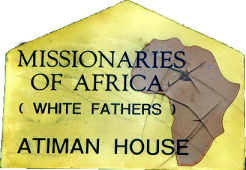
The annual meeting of the three Spiritual Year Formation Centres of our Society took place recently in Tanzania.Atiman House in Dar es Salaam The confreres had time to share views and experiences and Luigi Morell gave an input on Evangelical Counsels which brought lots of discussion.
The confreres were welcomed by Vincent Tran and Patrick Norah at Atiman House in Dar es Salaam. They were Grégoire Milombo and Prosper Mbusa from Bobo-Dioulasso, Ferdinand Van Campen from Arusha and Francis Bomansaan with Patrick Bataille from Lua Luo Kasama. Also present; Sergio Villasenor from the General Counsel, Jean-Michel Laurent as Secretary to the formation, Luigi Morell as facilitator, Victor Lijaji as translator and Anselme Somda as secretary.
The participants enjoyed an outing at the Spiritan Center in Bagamoyo. They also visited the museum, had a nice meal and some of them enjoyed a swim in the ocean.
Reported by Patrick Bataille, M.Afr
Dar es Salaam 2013 02
White Fathers’ House
From Wikipedia, the free encyclopedia
The White Fathers’ House (also known as Atiman House) is a historical building in Dar es Salaam, Tanzania. It is located in Sokoine Street, north-est of St. Joseph’s Cathedral. It is named after the White Fathers, as the building has been the seat of their mission since 1922. The alternative name of “Atiman” refers to Adrian Atiman, an African physician who was freed from slavery in Nigeria by the White Fathers and later served in Tanzania until his death, in 1924.
The building is believed to have been built in the 1860s (possibly 1866) as a harem for Sultan Majid of Zanzibar. In 1922, it was sold to the White Fathers, and became their main base in East Africa. The building is open to visitors and has a little exhibit with old pictures of Dar’s sea front, dating back to the years of German rule (early 20th century).
Bagamoyo: Spiritan Center
Some 70km north of Dar es Salaam, on the coast opposite the southern tip of Zanzibar, Bagamoyo was once one of the most important trading ports on the East African coast. The former capital of German East Africa, it is now the center of some building in the region. Bagamoyo however has increased in importance today. Missionary Spirit Travel will guide you to rediscover the roots of the Holy Ghost Congregation (Spiritans) in East Africa. This historical background from the first Spiritan Missionaries who came into East Africa over 100 years ago can be vitalised by the presence of a cross, cemeteries, museums and other ethnographica material.
Also a church.
China is investing US $10B to make Bagamoyo the most important port in Africa by 2017. READ MORE

Interview with John Lynch

John shares with us his understanding of addiction as a form of today’s slavery. He says: “I believe that it is a form of slavery in that it takes away freedom of choice within the individual. When one is driven to act by anything that is taking away freedom of choice, then I think it is appropriate to speak of it as a form of slavery.” Slaves of addiction
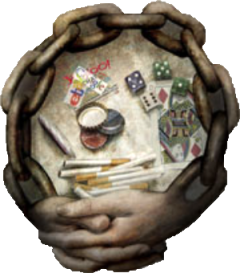
He concludes the interview with wise words saying: “In reality there is “no gain without pain”. The only constant in our lives is change. When the addict recognizes the addiction and is willing to accept it and try to live in the present moment seeking in faith and trust in the higher power, he or she can honestly live as “a wounded healer”, seeking each day honesty, openness and willingness, which are the essentials of recovery.”  READ MORE

FENZA CONFERENCE – Child Abuse and Trauma Management

FENZA CONFERENCEFENZA

Our next FENZA Conference will take place on Wednesday, 24th April 2013
Venue: Faith and Encounter Centre (FENZA), Leopards Hill Road, Bauleni (near Mathia Mulumba Catholic Church or Yatsani Radio).
Time: 14:00 to 17:00 hours
Theme:    Child Abuse and Trauma Management – Facts, Culture, Lessons to be learned
We have invited speakers from different ways of life to trigger off the discussion.
We hope to see you on Wednesday, 24th April 2013.
The FENZA Team

Page 105 of 116

Powered by WordPress & Theme by Anders Norén