Interview with David Brubaker

David BrubakerPope Francis, in his Pentecost homily, invited us to be aware of transient structures which have lost their capacity for openness. He said: “Are we open to ‘God’s surprises’? Or are we closed and fearful before the newness of the Holy Spirit? Do we have the courage to strike out along the new paths which God’s newness sets before us, or do we resist, barricaded in transient structures which have lost their capacity for openness to what is new? We would do well to ask ourselves these questions.”
In this new interview David Brubaker shares with us his evolving thinking on the role of organizations in the ongoing quest for human freedom and dignity.
In today’s “information revolution” the volume of information entering and circulating within every healthy organization is indeed overwhelming. When we see information as “nourishment” we are much more likely to drink at its wells and also to share it freely than when we see it as a finite source of “power.” David concludes the interview inviting us to integrate love in our leadership. He says: “Those of us who are leaders, formal or informal, must also strive to be lovers.” READ MORE
 
David Brubaker 02

Mafrwestafrica – Lettre du 26 mai 2013

Mafrwestafrica 02Cher SAP Blog
Aujourd’hui, les Missionnaires d’Afrique de l’Ouest vous proposent de visiter de nouvelles pages sur leur site www.mafrwestafrica.net :
Dans la rubrique « Actualités » :
« Quelques flashes d’actualité », qui nous emmènent d’une part au Congo pour la session des jeunes confrères, et le serment et diaconat à Kinshasa, d’autre part à Abidjan pour la rencontre des familles de nos confrères. (lire la suite)
Dans la rubrique « Justice et Paix» :
« Mieux vaut prévenir que guérir », le témoignage de notre confrère Andreas Göpfert qui consacre beaucoup de son temps à animer des sessions pour apprendre à éviter les conflits. (lire la suite)
– Dans la rubrique « Vu au sud, vu du sud » :
« Investir dans l’agriculture » : les réflexions de notre confrère Maurice Oudet suite à sa participation à un forum en France. (lire la suite)
– Dans la rubrique « Dialogue interreligieux » :
« Une Tunisienne et Vatican II », ou comment les contacts d’une musulmane avec un Missionnaire d’Afrique et les chrétiens de Sfax lui ont ouvert l’esprit et le cœur. (lire la suite)
– Dans la rubrique « Témoignages » :

« Les barbes chez les Pères Blancs », quelques réflexions et informations intéressantes et humoristiques données par le Père Frank Nolan, de Tanzanie, sur un sujet rarement abordé. (lire la suite) .

Communication from the Bishop’s Conference of Southern Africa regarding the highly controversial E-Tolling system

Raymond McQuarrie 2Dear Friends,
Please see below the communication from the Bishop’s Conference of Southern Africa regarding the highly controversial E-Tolling system.
This coming Saturday (25th May 2013), Fr. Mike Deeb (SACBC J&P Coordinator) and myself have called a meeting of all J&P groups and interested people, at the Regina Mundi Catholic Church in Soweto, at 10:30am, to look at how we as a Church can deal with this issue, and plan our campaign.
The press release itself can be used in your communities, prayer groups and Justice and Peace groups as a discussion paper which we hope will encourage you to further action.
Please be informed on this issue and contact the SACBC J&P Department should you like to know more on the Catholic Bishop’s stance.  Lots of information can be found online too.
With every good wish and God bless.
Raymond A. McQuarrie, M.Afr.
Vicar for Justice & Peace
Archdiocese of Johannesburg
Gauteng, South Africa
Justice and Peace Press Release on E-tolling
SACBC Justice and Peace Statement on E-Tolling and Gov Accountability

An AA Dream

Guido_Stuer1Coming closer to the end of his trip to Zambia, as a way to express his gratitude to everyone who welcomed him so nicely, Guido Stuer is offering this poem as a reminder that God loves us all.
I dreamed one night I passed away,
And left this world behind.
I started down that lonely trail
Some of my friends to find.
I came to a signpost on the trail
The directions it did tell:
KEEP RIGHT to go to HEAVEN,
TURN LEFT to go to HELL.
 
I hadn’t been too good on earth,
Just a hopeless boozing rake,
And knew there at the crossroads
The path I’d have to take.
So I started on that rocky path
That leads to Satan’s place;
And I shook within not knowing
Just what I’d have to face.
 
Old Satan met me at the gate,
“What is your name, my friends?”
I said, “I’m just old sober Sam
That’s come to a sad end”.
He glanced through some yellow files,
“You’re listed as an ALCOHOLIC,
We do not want you here.”
 
I said, “I’m looking for my friends,”
And a smile stole o’er his face.
“If your friends are alcoholics
They’re in the other place.”
So I went back the way I came
Till the crossroads I did see.
Then turned right to Heaven
As happy as could be.
 
St. Peter smiled and said: “come in,
For you I have a berth.
You are an alcoholic.
You’ve been through hell on earth.”
I saw al Dud and old Pat too.
Rill R. and a friend called Bell.
And brother I was tickled
‘Cause I thought they’d gone to hell.
 
So brothers all take warning,
Learn something from my trip.
You’re got a place in heaven
If you try hard not to slip.
If someone tempts you with a drink
When you’re not feeling well,
Tell him you’ve going to heaven
And he can go to hell!
 

Antislavery Workshop in Chipata

Dave CullenBy Dave Cullen, M.Afr
The Association of Religious Men of Zambia (ARMZ) here in Chipata decided that on the occasion of a meeting of members to elect a new executive it would be fitting at the same time to hold a day’s workshop on ‘Slavery in our midst’. It was our way of linking up with the 125th anniversary of Cardinal Lavigerie’s tour of Europe to campaign for the end of slavery as also to commemorate the birth of Livingstone 200 years ago.
there were 12 members of ARMZ present at the workshop, 4 of them Missionaries of Africa. Others who accepted our invitation to attend were 2 representatives from five Sister’s Congregations, 2 Dutch volunteers very much concerned with helping prostitutes in Chipata plus representatives from the local clergy, Caritas and Radio Maria. There were four very good presentations, on prostitution, street kids, child labour in rural areas and exploitation of the vulnerable through cheap labour. After each presentation there was group sharing on just one question: what can we do to overcome these forms of slavery in our midst? Hopefully we will take up the challenges presented and work through such bodies as ZAS, Caritas, NGO’s as well as those groups and individuals who show particular concern in these areas, amongst them presenters of these problems to us who were clearly concerned and actively committed to find solutions.
We shall hold another meeting next year at which we shall ask: what did you actually do about those resolutions you took at last year’s workshop? Hopefully there will be some positive progress recorded. If there is we shall share the good news with you.

Burial of Steven Chowa, brother of our confrere Bernard

Bernard Chowa 02Our confrere Bernard Chowa has returned to Tanzania today after a delay of one day due to the cancellation of his flight on Precision Air. The funeral of his brother Steven Chowa took place on Thursday the 9th May at The Good Shepherd Parish in Kabwata, Lusaka. Together with his wife, the decease is leaving behind four girls and one boy. Steven Chowa was a hardworking man entirely dedicated to his family. He is the one who took care of Bernard by allowing him to pursue his education and become a missionary priest. Bernard is very grateful to the Missionaries of Africa for the support he received from them.
Let us pray for his ministry in Tanzania and for the entire family still crying for the loss of such a committed man.
See also:

Death of the brother of Father Bernard Chowa, missionary in Tanzania

Words of thanks from Patrice R. Sawadogo following his surgery in India

Dear confreres,
You might have heard that I was away to India for treatment. You surely have joined your prayers to those of my fellow confreres working here in Zambia, my community members, my parents, siblings and relatives as well as my friends, imploring the good Lord for a successful outcome of my worrisome knee surgery. I am very glad to write to you today to confirm that God has granted your prayers: the surgery went smooth and was successful. I am grateful to God and to you all for seeing me through this ordeal.
I sustained a complete anterior ligament rupture sometime in August, in Kasanka, while playing football with the youth of our Parish. For this kind of injury, the sole solution is to undergo surgery to reconstruct the torn ligament. But this kind of surgery is not yet available in Zambia. Owing to this fact I was then sent to India, amidst various possibilities for treatment.
Great fear and profound sadness overwhelmed me when I got the visa to India and it became certain for me that I will have to venture into this unknown Asian continent.  Great sense of fear crept into my heart when I thought of the many and frequent natural calamities, the political and religious upheavals, the various sorts of hardships that occur in that part of the world. My fear grew even higher when I was told that in India I will face loneliness if I am not rejected, that nobody will even want to shake hands with me. Indeed I experienced great fear and I was deeply saddened to go to India but in the end fear didn’t overcome me.
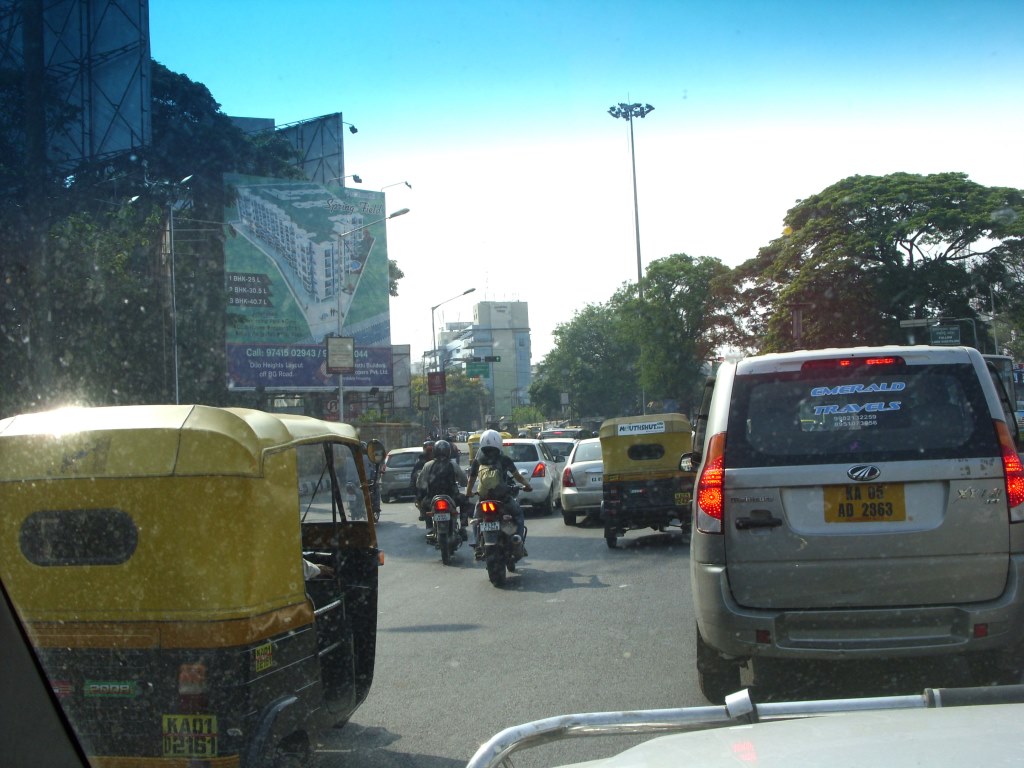
Patrice R. Sawadogo in India 00I eventually started off for Bengaluru in India on the 5th April where I reached safe and sound on the 6th. I was right away astounded by the extreme and never ever seen huge amount of people in Bangalore. Besides, the traffic comprising of cars, huge amount of motorbikes, three wheel cars for public transport, buses and trucks appeared to me very chaotic, highly risky and dangerous. At the very beginning I would always experience headaches and dizziness whenever we go on the road. Thanks to God and to the good community driver and the confreres, no accident, no harm whatsoever occurred.
I was greeted with a warm welcome in our missionary formation house. Students and confreres proved me right from the beginning till the end of my stay that I was their brother. They showed concern for what I was going through. They were very compassionate and supported me in a particular way that I can never forget. All, most particularly students, were eager to know something about Africa, about Zambia, about our apostolate.
Our neighbors as well were very good to me. Upon arrival in the community, the following day, while walking along our wall, there came an Indian couple with their grown up kids and they started a conversation with me visibly happy and amazed to see an African in the surroundings. I was flabbergasted when they themselves asked to shake hands with me. In the same way, our neighboring community of religious sisters was very much welcoming to me as they often paid me visit. I had the opportunity to visit the African community of students. I said mass for them in French as they usually have mass on every first Sunday of the month with Fr. Sabu. The students are mainly from Ivory Coast, Cameroun, Togo, Ghana, and Senegal. I felt very much at home in India following the good welcome and upon realization that there are many Africans in India. My initial fear disappeared. I was then ready to go to the hospital to start the treatment for which I was in India.
Patrice R. Sawadogo in India 01The hospital staff members, doctors, nurses and workers showed to me great respect, openness and kindness. My knee surgeon would explain everything to me before the surgery: what went wrong in the knee and the way he was going to perform the operation, the various steps I would pass through after surgery to reach complete healing. He asked for few lab tests and was able to discover that my kidney’s function is not as high as it should be for a young man of my age. He straightaway called for the nephrologists who came within minutes. They gave the green light for the surgery when they realized that the low function of the kidney was due to painkillers I have been taking in Africa. They were certain that this would not hinder the surgery process but I would need to treat it as soon as possible lest it worsened. The nephrologists’ observation was right. The surgery was a success and two days later I was discharged. I went back home where the physiotherapy doctor daily attended to me. I was able to walk upright, though limping, after two weeks of physiotherapy. I dropped my walkers and went back to the nephrologists to deal with my kidney malfunction. He was very welcoming and nice. He again explained what might have slowed down the performance of my kidney and the kind of treatment he is going to give me. He gave me nephrocaps. I was to take one tablet daily with a lot of water for one week to cleanse the kidney and then go for lab tests. I was very delighted to hear him say: “Only God knows everything and can do everything. I am not God but I am pretty sure this only tablet will be enough to solve your problem.” One week later I brought to him the results of the lab tests. They were perfect. I didn’t need any treatment except to continue drinking a lot of water and avoid pain killer tablets. Meanwhile my knee had steadily improved. The pain had gone down and I was able to bend it up to 90 percent. That is when the two doctors gave me the green light to go back to Zambia. Which I did without delay lest I start worshiping the “holy cows”! I was back to Lusaka on the 10th of May.
Patrice R. Sawadogo in India 02bI would like to express my profound gratitude to God and to you all for the success of my treatment. Sincere gratitude to the confreres who made it possible for me to go to India for treatment and to all who stood by my side day and night (even spending nights with me at the hospital) in Bangalore. My gratitude goes as well towards the confreres and all who shoulder the burden of driving me to the hospital daily for the physiotherapy sessions.
I found treatment in India very excellent and at very low price (even cheaper than treatment here in Africa). No wonder a lot of people from all over the world do travel there for treatment. At Narayana Hospital in Bangalore, I met patients from the Middle East, Algeria, Nigeria, Congo, Tanzania, Ethiopia, Kenya and so on. To me, India is an alternative possibility where confreres could be sent for treatment, if feasible and necessary. Our community, the Formation House, is at more or less five minutes drives to the above mentioned hospital. There would only be a need to think about appointing a confrere to care for the patients as I saw it to be a highly demanding task.
Patrice R. Sawadogo, M.Afr.

Address of Pope Francis to Ambassadors on the world of finance and economics – 16th May 2013

ADDRESS OF POPE FRANCISQuotations from the address:
… Consequently the financial crisis which we are experiencing makes us forget that its ultimate origin is to be found in a profound human crisis. In the denial of the primacy of human beings! We have created new idols. The worship of the golden calf of old (cf. Ex 32:15-34) has found a new and heartless image in the cult of money and the dictatorship of an economy which is faceless and lacking any truly humane goal.
The worldwide financial and economic crisis seems to highlight their distortions and above all the gravely deficient human perspective, which reduces man to one of his needs alone, namely, consumption. Worse yet, human beings themselves are nowadays considered as consumer goods which can be used and thrown away. We have started a throw-away culture. This tendency is seen on the level of individuals and whole societies; and it is being promoted! In circumstances like these, solidarity, which is the treasure of the poor, is often considered counterproductive, opposed to the logic of finance and the economy. While the income of a minority is increasing exponentially, that of the majority is crumbling. This imbalance results from ideologies which uphold the absolute autonomy of markets and financial speculation, and thus deny the right of control to States, which are themselves charged with providing for the common good. A new, invisible and at times virtual, tyranny is established, one which unilaterally and irremediably imposes its own laws and rules. Moreover, indebtedness and credit distance countries from their real economy and citizens from their real buying power. Added to this, as if it were needed, is widespread corruption and selfish fiscal evasion which have taken on worldwide dimensions. The will to power and of possession has become limitless…
there is a need for financial reform along ethical lines that would produce in its turn an economic reform to benefit everyone. This would nevertheless require a courageous change of attitude on the part of political leaders. I urge them to face this challenge with determination and farsightedness, taking account, naturally, of their particular situations. Money has to serve, not to rule! The Pope loves everyone, rich and poor alike, but the Pope has the duty, in Christ’s name, to remind the rich to help the poor, to respect them, to promote them. The Pope appeals for disinterested solidarity and for a return to person-centred ethics in the world of finance and economics…
FULL ADDRESS
ALSO
Pope Francis Shakes up the Ambassadors Meeting and Addresses Economic Issues
Discours du Pape François au sujet de la dictature de l’économie

Readings for Religious Education Teachers

“Here is a selection of useful quotations about various aspects of Religious Education, both for those studying for a certificate, diploma or degree and for those already in the classroom. This is not a course, but a handful of hints.
This book is a timely addition to the Religious Education materials available in Zambia. It allows us to draw on the wisdom of others.”
Contents: spirituality, religion (including African Traditional Religion, inculturation – contextualisation, pluralism), education (including commitment and faith) religious education (including maturity and concepts), attitudes and skills of students, special skills (including critical thinking, symbolism and Ecumenical empathy), teaching strategies ( including attitude for creativity and motivation), morality (including teacher’s role), assessment (including knowledge as understanding), cross fertilization (history, geography, science, literature, sport and arts).
RE_0001“The essence of African morality is that it is more societary than spiritual; it is a morality of conduct rather than a morality of being. It defines what a person does rather than what he is. Kindness is not a virtue unless someone is kind; murder is not evil until someone kills another person in his community. Man is not by nature either good or evil except in terms of what he does or does not do. (J.S. Mbiti in “African Religions & Philosophy” Heinemann 1969:213)
Readings for Religious Education Teachers
Compiled by J. Henze, Published by the Copperbelt Religious Education Development Unit, Mission Press, Ndola, Zambia, 2000, 106 pages.
This book in on sales at Woodlands, Lusaka.

Some insights about the Republic of Mozambique

Map of MozambiqueLetter sent by Maurice Odhiambo, second year stagiaire in Dombe.
Part of Southern Africa, Mozambique is bordering the Indian Ocean and is located south of Tanzania while surrounding the southern part of Malawi and contiguous to Zambia, Zimbabwe, South Africa and Swaziland. A population of over twenty million inhabitants share 800km² of land. Most people are of Bantu origin with a significant presence of Asians and Europeans. Having been a Portuguese colony, the official language is Portuguese which is widely spoken in towns whereas in villages the natives speak their local language.
Mozambique is composed of ten provinces. Each one has its capital referred to as “centre of administration”. With about two million residents, the heart of the economic activities is concentrated in the capital Maputo situated in the very southern part of the Republic far away from the rest of the country. Other main cities are Beira, Nampula, Nacala and Quelimane.
Around 70% of Mozambicans are peasants who cultivate maize, rice, beans and cassava. They also do fishing and handicraft.
Samora Moises Machel 02Mozambique attained independence on 25th June of 1975. The first president was Samora Moises Machel who perished in a plane crash. He was then succeeded by Joaquim Chissano. The actual president is Armando Guebuza. Mozambique is still in the process of development both politically and economically. It had faced many challenges since independence including fifteen years of civil war between Frelimo and Renamo. Heavy floods, famine and earthquakes brought also lots of destruction. These factors explain the level of poverty prevailing up to now even though the country is experiencing strong economic growth.
A peace accord was finally signed in Rome in 1992 through the mediation of the Catholic Church. It is really sad that the full content of these agreements have not yet been fully implemented. The government has been reluctant which is resulting in tension in the country. After 21 years since the peace accord, the government is still dialoguing with the opposition on how fully implement these agreements.
The Church in Mozambique is both old and young. As a matter of fact, the Church has just celebrated 500 years of existence. On the other hand, many setbacks affected the life of the Church before and after independence; accusation of collaboration with the colonizers, departure of many missionaries, local priests having to ask permission from the government four days in advance in order to celebrate Mass on Sundays. As a result, primary evangelization remains the main trend of the pastoral life of the Church whereby church attendance in some places is minimal.
Flag of MozambiqueI can say that I benefit a lot to know more about the historical background of Mozambique. Little by little I am gathering more information for my enrichment and pastoral experience.
By Maurice Odhiambo
READ MORE ABOUT MOZAMBIQUE
To help people to get organized
9 dead after Renamo threatens war to block elections
Log Smuggling, Illegal Logging, and Corruption in Mozambique
MORE NEWS FOR YOU:
Mozambique: The Bob Dylan link
By Leo Johnson Presenter, One Square Mile

makeshift roads

Page 102 of 116

Powered by WordPress & Theme by Anders Norén