Category: Publications Page 4 of 41

Various publications; Bulletins, magazines

Mafrwestafrica lettre du 02 février 2017

Mafrwestafrica logoAujourd’hui, les Missionnaires d’Afrique de l’Ouest vous proposent de visiter de nouvelles pages sur leur site http://www.mafrwestafrica.net.

Actualités

« Intentions générales et missionnaires 2017 » telles que confiées à tous les croyants pour l’année nouvelle (lire la suite).

« Statistiques Missionnaires d’Afrique au 1er janvier 2017 » le nombre de nos communautés, des missionnaires, les nationalités, et autres chiffres intéressants (lire la suite).

« Niger, Burkina, Mali contre le terrorisme » une rencontre des responsables de ces trois pas pour contrer la violence (lire la suite).

Témoignages 

« Otages d’Arlit et assassinat de 2 français ? » y a-t-il un lien entre ces deux réalités ? Un article à ce propos (lire la suite).

« Au revoir inquiet de la présidente de l’Union Africaine » Nkosazana Dlamini Zuma. Mentionnant violences extrémistes de toute sorte, les actes de terrorisme, le crime international, les mouvements des populations à travers le monde (lire la suite).

« Que le NEPAD élargisse ses compétences », ce qu’en pense Ibrahim Assane Mayaki, qui en est responsable depuis 2009 (lire la suite).

Dialogue interreligieux

« Quel dialogue réellement ? » Caritas Europe mentionne l’islam à deux reprises dans son rapport, et le fait que le dialogue n’est pas suffisamment pris en compte (lire la suite).

« Les religions dans les medias en Algérie » L’Autorité de régulation de l’audiovisuel (ARAV) en Algérie a lancé un rappel des règles de traitement du fait religieux (lire la suite).

« Deux états : Palestine et Israël », telle est l’orientation souhaitée par les évêques d’Europe, dans leur rencontre du 14 au 19 janvier 2017 (lire la suite).

Justice et Paix

« Côte d’Ivoire : les évêques expriment leur inquiétude » au sujet de la situation politique actuelle dans leur pays (lire la suite).

« Le festival d’Angoulème dénonce l’injustice en Afrique » tout particulièrement par un auteur malgache et un autre congolais (lire la suite).

« Procès en Côte d’Ivoire » c’est seulement six ans après les faits que s’ouvre le procès des disparus du Novotel d’Abidjan (lire la suite).

« Gambie : Ousman Sonko sera-t-il poursuivi pour crimes contre l’humanité ? » une procédure dont Trial International serait à l’origine (lire la suite).

Vu au Sud – Vu du Sud

« Côte d’Ivoire, sortie de crise ? » c’est la question qui se pose même si une évolution positive semble prendre place dans ce pays (lire la suite).

« Gambie, retour de Adama Barrow » Le chef de l’état est enfin rentré au pays après de nombreuses questions se posant au sujet de son retour, et l’exil de son prédécesseur (lire la suite).

« Manger « Burkinabè » ! » le gouvernement burkinabè ordonne aux services publics de prioriser les produits alimentaires locaux (lire la suite).

« Le Maroc de retour à l’UA » discours historique du Roi du Maroc suite à l’acceptation de l’adhésion de son pays au sein de l’UA après une longue absence (lire la suite).

« Qui succédera à Alassane Ouattara en 2020 ? » une question qui n’est pas évidente, mais il semble que l’actuel président est plutôt favorable à  Amadou Gon Coulibaly et Daniel Kablan Duncan (lire la suite).

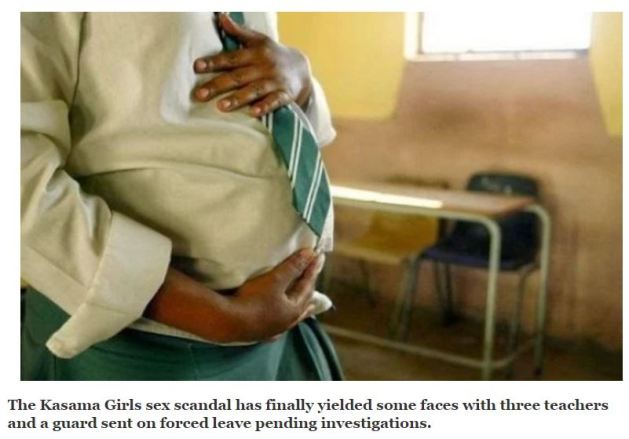
Co-Responsibility in Education, case of gross sexual scandals in Kasama Girls Secondary school, Zambia.

Social Commentary by Venerato Babaine, M.Afr

captureA few weeks ago, a girls’ Secondary School in Kasama District of the Northern Province of Zambia got into the media, in public buses, local market areas, beer-halls, official fora and places of worship. This is a story about the forgotten and vulnerable youth. When the news burst-out that there is gross sexual scandals in Kasama Girls Secondary school, the media got into action and a number of people namely; school authorities, education department, security bodies, parents, politicians, civil leaders and people of goodwill got vigorously concerned. It’s a moral issue and a criminal offence that has drawn-in various people according to their responsibilities. This is evidence of poor discipline in institutions of learning, poor parental guidance and insufficient supervision by the Education Department.

wolf-sheep-s-clothing-cartoon-pngThe Ministry of General Education has intervened through its procedures, the police is making investigations and parents are waking up to the scandalous news about their children. The blame of physical sexual activity with the learner-girls at Kasama Girls Secondary School apparently rests on the shoulders of some male teachers and security guards. Security, disciplinary and legal measures are in process as investigations continue. This scandal has awakened a number of stakeholders to their responsibilities well done or neglected. People now feel more concerned about their children in learning institutions than before. The fingers are being pointed at the school authorities, the ‘ravenous’ teachers and security guards; those men, “wolves-in-sheep-skins. Trust betrayed, guidance, security and safety denied of the female learners.

However, there is a group of people who might walk-away freely in this situation without taking their share of blame. These are: parents, police, Education Department, churches, business community and cultural leaders. These people are partly the causes of this scandal because they failed to play their part and fulfil their responsibilities. The burden of responsibility rests on these stakeholders. Beyond media sensationalism, there is a responsibility to bear as a matter of justice and integrity. Little or nothing is questioned on the leadership & management of the school; the parental guidance, Parents’ & Teachers ‘Association, Management Committee and the Board of Governors.

It is parents’ responsibility to be concerned about the affairs of their children when they are at home and away at school. How many parents sit down with their children during holidays to ask them the state of affairs at school? How many parents come to school to visit their children or have a conversation with the class-teacher, matron or the Head Teacher regarding their daughters? Some parents wait for the holiday period to end, do the children’s shopping, throw them on the bus and wave them goodbye. Then parents sigh in relief as the children depart. At the end of term, the return the children is bad news. A child lives an independent and unchecked life at home, at school and in Kasama town. The school authorities do what they can but the girl is her self-mentor and her own superintendent.

In such moments of scandal, the police becomes vigilant. Some police officers are parents. They may even have some children in Kasama Girls Secondary School. It would be appreciated that safety and security checks are undertaken regularly in such an institution. Police Service is not an Emergency and Crisis Management Institution. It has to prevent crime, enforce law and order, educate people, advocate for social sanity. Our men and women in uniform fail the public so often; their duty seems to rush where there is danger, crime and break down of law.

Sex abuse has been cited in some institutions of learning and professional training. A visit to any learning institution during normal time by a District Police Commander or his/her personnel would assure security and show interest in the school. It would create a stable security relationship between the school, the public and the parents. That is co-responsibility at its best.

Such a sexual scandal is in the realm of morality. This attracts religious leaders; the men and women of God. Soon pastors will start vigils of prayer for the school. Some may subject the girls to healing and cleansing sessions. It is a shame that this taken too long before pastors, priests and prophets have acted. How many pastors or priests visit the school for spiritual guidance or counselling? The Sacred Scripture says: “If I go into the field, behold, those pierced by the sword, and if I enter the city, behold, diseases of famine! For both prophet and priest ply their trade through the land and have no knowledge” (Jeremiah 18:14).  Good shepherds or mentors have to be where things happen, in real life to mitigate damage and loss. They say that “A stitch in time: saves nine”.

Responsibility and education of the youth as the future of a nation applies to district education authorities, cultural leaders of the land and some Non-Governmental Organisations (NGOs) concerned about the welfare of people. Authorities and bureaucrats ought to leave their offices and palaces and go where the people are, where the messy life is. This is stewardship. In such cases we seek integrity to do our duty faithfully, humility to be servants of the vulnerable and peace that creates an environment of learning, for development and prosperity. People in Kasama and every one of goodwill must go out to attend to the neglected children. Educators of our learners must be vigilant and creative in their delicate role of nurturing youth by being role models and mentors.

Mafrwestafrica lettre du 19 janvier 2017

Mafrwestafrica logoAujourd’hui, les Missionnaires d’Afrique de l’Ouest vous proposent de visiter de nouvelles pages sur leur site http://www.mafrwestafrica.net.

Tout d’abord, une information intéressante : au 7 Janvier 2017 : Nous étions 1222 Missionnaires d’Afrique Moyenne d’âge 68 ans

Actualités

« Sommet Afrique-France au Mali » deux parties dans cet article, l’annonce du sommet le 11 janvier, son évaluation le 15 janvier

« Burkina Faso, diverses actualités » : remaniement politique en vue, la venue proche du FESPACO, et des craintes de terrorisme (lire la suite)

« Soutien au président du Niger » allusion à la manifestation du 21 décembre, et à celle prévue pour le 13 janvier (lire la suite)

« Accord en Côte d’Ivoire » entre les mutins et le gouvernement : discussions plus complexes que prévues mais fructueuses (lire la suite)

Témoignages 

« L’islam des tribus » un livre de Jacqueline Chabbi, des pages assez denses mais abordables pour tout lecteur intéressé par l’Islam et l’interreligieux (lire la suite)

« Le Père Chabanon écrit de l’Ouganda » notre confrère nous en envoie régulièrement et nous lui en sommes reconnaissants (lire la suite)

« Opérateurs pastoraux tués en 2016 » un texte pris sur le site de l’agence Fides du Vatican : 28 personnes tuées (lire la suite)

 Dialogue interreligieux

« Prière pour l’unité des chrétiens du 18 au 25 janvier » comme chaque année, avec le texte du pape à ce propos (lire la suite)

« Valorisation de la raison » sur le site de “Saphir News” (texte du 26 décembre 2016) – (lire la suite)
« Eduquer à la modération en religion » un article de Bénédicte Lutaud paru dans le Monde des religions du 22 décembre 2016 (lire la suite)

 Justice et Paix

 « Politique africaine de Barack Obama » les africains reprochent à Obama de ne s’être pas assez impliqué envers l’Afrique, mais les choses ne sont pas si simples qu’elles peuvent paraître (lire la suite)

« Qu’est-ce que le e-CFA ? » Le Sénégal sera le premier pays en Afrique de l’ouest à expérimenter le e-CFA. Servant ainsi de point zéro, si l’expérience est concluante, la monnaie sera étendue dans toute l’Afrique de l’ouest. (lire la suite)

« Journée mondiale des migrants et réfugiés (Pape François) » ce texte du pape insiste fortement sur les migrants mineurs (lire la suite)

Vu au Sud – Vu du Sud

« Nouveau gouvernement en Côte d’Ivoire » réélection de Guillaume Soro, avec quelques changement malgré tout (lire la suite)

« La situation au Congo (RDC) » nous consacrons pour une fois une page à ce pays d’Afrique Centrale où la situation est loin d’être simple (lire la suite)

« Yacouba Izaac Zida rayé des forces armées du Burkina » suite à sa fuite au Canada et à son refus de rejoindre son pays (lire la suite)

Editorial of Bishop Patrick Chisanga, OFM Conv.; “Ba Mishioni ba Lelo, Nifwe”.

Note from the webmaster of SAP Blog: We are pleased to share with you the editorial of Bishop Patrick Chisanga, OFM Conv. of Mansa Diocese published recently in their magazine. A special mention was given to the first missionaries who came to Zambia at Mambwe Mwela in 1891 as the Church of Zambia is celebrating its 125th anniversary. We are particularly touch with the aim of the diocese to enhance the faith and missionary spirit in the Youth.

Editorial of the Mansa Roundup magazine, volume 2, issue 6; Ba Mishioni ba Lelo, Nifwe”.

Rev. Patrick Chisanga Ordi Feb 2014 02bBy Bishop Patrick Chisanga, OFM Conv.

My dear Brothers and Sisters in Christ, complements of the season.

Christmas is a festive season that draws our attention to ‘the coming of the Lord’; a season of gratitude for the Lord’s manifold salvific interventions in human history; a time of awareness of God’s continued saving presence; an intense period of preparation and waiting in joyful hope for the coming of our Saviour Jesus Christ.

We thank the Lord for all the graces we received during the Extraordinary Year of Mercy. As we open this new liturgical calendar, during which the Catholic Church in Zambia celebrates 125 years since the arrival of the first missionaries at Mambwe Mwela (1891) and nine years later (1900) at Lwali near Chibote mission. Let us give a fitting glory to the missionaries who planted the first seeds of faith that has gradually grown into the present day Mansa Diocese. Let us also pay tribute to the ancestors of our land for opening their hearts to receiving the Good News. It is now our turn to assume responsibility and be committed to the continued propagation of the Good News of Salvation, mercy, unity and embracing every one with Christ’s love.

Christ’s love is precisely the Vision we have set as a Diocese in the Strategic plan 2016-2021, entitled “Let down the nets for a catch” (Lk.5:4) which was launched on December 12, 2015, and expressed in terms of a commitment to promotion of spiritual, moral education, health and general empowerment of the people in the diocese through evangelisation using well-coordinated pastoral and integral human development programmes based on three thematic pillars, namely: Pastoral Care; Social Human Development; Financial Institutional capacity and Self sustainability. Thank you very much to all those who successfully realised the goals in their respective departments for the year 2016. Our general evaluation indicates that the Social and Human Development managed 75% of the planned activities, the Pastoral Care completed 54% while the Financial Institutional Capacity and self-sustainability area realised only 15% of the planned activities.

I strongly urge the departments in the third pillar to assess their poor performance and ensure that set goals are realised. I also ask all diocesan departments, institutions and parishes to:

  1. Familiarise themselves with the vision, Mission and Values of the Diocese
  2. Draw from the strategic plan activities which pertain to them and workout an implementation programme.

iii. Ensure that their own local plan realises and enhances the general orientation of the Diocese.

The implementation of the strategic plan will be done in the context of celebrating 125 and 116 years of Catholic Faith in Zambia and Mansa Diocese, respectively. The missionaries did their part; today the ball is in our court, ‘We are the Missionaries of Today’. ‘Ba Missioni balelo Nifwe’ is the theme I therefore propose to accompany the pastoral action of the Diocese with effect from Saturday 17 December, 2016 through to 25 November, 2017, during this period all parishes are expected to:

  1. Set up programmes of missionary formation and catechetical lessons on the history of the Catholic Church in Zambia, in Mansa Diocese and in their respective Parishes.
  2. Enhance the faith and missionary spirit in the Youth and Holy Childhood.

iii. Display banners of the Pastoral Theme and recite the prayer at the beginning of every Eucharistic celebration.

  1. Renovate and beautify the Church buildings and surroundings.
  2. Organise pilgrimages at local or deanery levels to the shrines of Divine Mercy (Lubwe) and or Santa Maria wa Mwelu (Chibote) in honour of missionaries.

As we begin the festive season, let us all be united, repeating with one voice the refrain of the early Christian Community: “Maranatha! Come Lord Jesus.” Let this be a year of life changing encounters with the Lord, deeper commitment to the vision, mission and values of our Diocese and indeed, a year of celebrating God’s Love and Mercy through the pioneer missionaries to our land. May we all pay heed to the Lord’s command to “Go therefore to the world and proclaim the Gospel to all creations” (Mk. 16:15), because Ba Mishioni ba Lelo, Nifwe”.

I seek your prayers and wish each one of you the grace and peace of the Lord “so that you may have life in abundance” (Jn.10:10). May our blessed Mother accompany us on our journey of faith as a Diocese.

Below; PDF file of the magazine.

mansa-roundup-logoCommunications Office Diocese of Mansa Plot 225, Cathedral Road Mansa, Zambia.

Office Email: communicationssecretary@yahooo.com

News from our M.Afr Brazilian Sector.

missionarios-da-africa-brezil3The Missionaries of Africa of Brazil wish you a Happy New Year 2017. We are pleased to send you the news of the Brazilian Sector so that our mission may be known to all Society. Enjoy the reading in French. An English version is in preparation. Holy Year 2017. Moussa Serge Traore, M.Afr, Superior.

notre-dame-daparecida-pngOlá ! La situation politique et sociale reste tendue et instable. L’impeachment de la présidente a eu lieu. Le vice-président a pris le pouvoir. La chasse aux corrompus continue avec l’arrestation de politiciens. Les mesures et propositions du nouveau président de la république provoquent des manifestations publiques. La Conférence Nationale des Évêques du Brésil s’est prononcée contre certaines propositions du Président. Au niveau ecclésial, les évêques du Brésil ont déclaré l’année 2017, l’année Nationale Mariale car le pays célèbre le Jubilée de 300 ans de la découverte de l’image de Notre Dame dans le fleuve Paraíba en 1717. A cette occasion, l’image de Notre Dame d’Aparecida parcourt les paroisses, et diocèses du pays. C’est l’occasion de grands rassemblements et grandes célébrations.

Les confrères vont très bien. Ils se réjouissent de l’arrivée cette année 2016 du Père Francisco Javier, mexicain, un ancien missionnaire au Congo. Nous avons 2 communautés au Brésil. La communauté du centre-ville est composée de Moussa Serge Traore, prêtre, Burkinabe, 45 ans, 14 ans de serment ; Luciano Fuchs, Frère, Brésilien, 49 ans, 13 ans de serment ; Francisco Javier Ambrosio Vargas, prêtre, Mexicain, 42 ans, 4 ans de serment, Ethelbert Onyeaghala, stagiaire, Nigérian, 32 ans. Le Père Nazzareno Benacchio, italien, 94 ans vit dans sa maison de retraite á São Paulo. En 2017 il fera 60 ans de serment. Il est rattaché á la communauté de Federation. La communauté de la périphérie est composée d’Angelo Lee, prêtre, français, 67 ans, 39 ans de serment et Raphael Muteba Ndjibu, prêtre, Congolais, 38 ans, 5 ans de serment.

confrere-au-brezilAu pays du carnaval et du football, nous, Missionnaires d’Afrique, réalisons notre vocation et notre projet apostolique : être témoins du Règne de Dieu et partager avec ceux qui l’accueillent la grâce de la Bonne Nouvelle. Tous nos engagements, dans leur diversité, sont orientés vers ce but. Nous sommes de plus en plus connus, appréciés et sollicités. Nous sommes très heureux de notre présence missionnaire au Brésil. Nous avons le sentiment profond d’une mission bien remplie. Vive la Mission ! Vive le Brésil ! Sainte Année 2017.

PDF FILE: news-from-brazil-january-2017

missionarios-da-africa-brazil-2

Newsletter South Africa No 70 – 28th December 2016

newsletter-south-africa-no-70-titleGreetings! We are still in the Christmas Season and, hopefully, in the Christmas spirit! But this Newsletter will be short because, as you read in my special message “A FREAK ACCIDENT”, I am now reduced to the use of only one hand; it is an awkward way of typing!

newsletter-south-africa-no-70-michel-meunier-with-justinOne good positive point, following that unfortunate accident, is that I have a very good “private driver and helper”. Indeed, Justin Ramde, a Burkinabe, going into his third year of theology in Cedara and living at our House of Formation in Merrivale, has been here since last Friday. He takes some weeks from his holiday to come here to help me. He has been very good, not only driving me safely here and there for different pastoral commitments, but also helping me during Mass (like holding the ciborium so I may distribute Holy Communion with my healthy hand), and showing himself very much of service for doing various things requiring both hands!

He was very happy to take part in the Christmas Eve Mass at Mother Teresa’s Home; the small chapel was packed with surely more than 100 poor and sick residents, adults and children, together with the Sisters. They sang wholeheartedly for the birth of Jesus and everybody was in a festive mood. After Mass, each one received a present from the Sisters. On Christmas day, we were at City Deep for the francophone community. The church was full and the choir was really good.

After Mass, four doctors from the congregation gave me a free medical consultation! They told me that the healing seems to be taking its course well. Thank you also for all your prayers!

I want to wish you all a very good Christmas Season and a Happy New Year!

Fr. Michel, M.Afr. Vocation Director.

“Where are my Hearts”? 125 years of Evangelisation in Zambia

patrick_mumbiThe title is not meant for everybody but for a few like me. It is just there to guide my thoughts but in the grand scheme of things it is also challenging to me. 

Patrick Mumbi, M.Afr

Recently, I gave a talk to the Missionary Oblate students and they chose the title; “Formation as Missionary oriented.” My talk centred on the mission of St Paul; “Being all things to all people” (1Cor 9: 19-23). For me this is the heart beat of missionary life and this is what I saw and moved me with the White Fathers 25 years ago even before I joined them. I observed and felt that they were sent to all people not only to the Catholics. St Paul’s mission of “becoming all things to all people” was modelled on Christ; the “Man of all seasons”. Just as Jesus Christ modified his life though he was God, St Paul too simplified his lifestyle, his preferences in order to win all for Christ. Adapting of one’s life and going an extra mile is not only a stepping stone for a great mission but also a fertilisation of Evangelisation for people to come to Christ. We sometimes laugh about Father Joseph Dupont nicknamed as Motomoto becoming the husband to the wives of Paramount Chief Mwamba but how many people did he win for Christ? Actually, the story is that when Chief Mwamba was probably dying around 1899 he gathered his counsellors and handed over his wives and the kingdom to Motomoto. Is this not the origin of the famous book, “Roi de Brigands”? Around 1898 in Chilubula area, Motomoto had already established friendship with Chief Mwamba unlike his father Paramount Chief Chitimukulu who did not consent to the White Fathers settling in his Kingdom.

Having the spirit of being all things to all people, missionaries were washing the wounds of people and bandaging them, giving injections and pills. At times their cars acted as ambulances because they would be awakened at night to take the sick and pregnant women to the main hospitals. I am pretty sure all these helped people to listen and become more open to receive the Good News. In my conception, there is no cut and dried priesthood or sisterhood. Priesthood is a tool through which one can propagate and accomplish the mission of Christ. Evangelisation is an archetype concept such that at every stage of human life it has to be reinvented. Archetypes like the Evangelisation of Africa which our Cardinal Lavigerie conceived, emerged from the human psyche. The word “evangelist” comes from the Greek word εὐαγγέλιον (transliterated as euangelion) via latinised evangelium. The Greek word εὐαγγέλιον originally meant a reward given to the messenger for good news (εὔ = “good”, ἀγγέλλω = “I bring a message”; the word “angel” comes from the same root and later “good news” itself (Class notes of scripture 1991). Archetypes are the formative templates that give breath (inspire) and depth (materiality) to events in the outer world (Carl Jung’s archetypes 1959). In certain individuals like our Cardinal, events or history prepare themselves; and when the archetypes are activated in a number of individuals and come to the surface, we are in the midst of history, as we are at present. Missionaries were seized by this archetype of evangelising of Africa and therefore packed their bags 150 years ago.   

african-altar-boysCommitment to Christ’s mission: This commitment was very important for missionaries. Probably this is the reason why they worked tirelessly. This commitment and courage continued even when others perished, and the energy to work hard every day, is what impressed some of us and got the vocation to join them 25 years ago. This year in 2016, I celebrated my 25 years of priesthood in Luena parish and Jack compound in Lusaka. But concerning mission, do we as young missionaries have the zeal and commitment to work extra miles today as they did? As altar boys, we were visiting outstations with missionaries for months during holidays. With them we conducted catechumen classes, helped to carry out marriages and house to house visitations etc. For some of us young missionaries, going to an outstation is like a punishment. The only thing we would wish is to go back to the parish as quickly as possible. But in those days, touring and knowing people, registering them in books were taken as evangelisation. Bringing happiness and fulfilment were some of the other attributes of missionaries to the people they evangelised.

exit-dragon-enter-the-tigerAvailability to the people of God: The Parish Office was open from Sunday to Sunday. Unlike today, we open when people come to knock at our doors then quickly close them saying; “we do not have time or we do not want to be bothered”. When I was young, I saw that when one priest went out of the Parish Office, another one entered in to attend to the people. It reminded me of the film of Bruce Lee: “Exit Dragon Enter the Tiger.” They were serious and firm as any other priest found in the parish office when it comes to matters of faith. When someone enters the office they would enquire if he or she received all the sacraments. I must also acknowledge that they were of different temperaments; some moderate while others were hard. Some of them preached with passion such that children would get afraid and begin to cry out.

The spirit of service: White Fathers were servants of God and peoples. They served them with humility. They not wait for people to come but they would go to the people so as to know them better. I knew some White Fathers who used to come to our village to drink beer such as Fr Cletus Gerrie van Erp and Fr Anton Buys. They did so as to familiarise themselves with the people and get to the grips of their culture. The whole village became Catholics. Even individuals who claimed to be from some other churches joined Catholicism.

The new mushrooming churches I have seen was a later phenomenon when White Fathers had left. I would like to acknowledge that the evangelised people became evangelisers of the Copperbelt and some parts of Zambia because these were properly catechised. In the 1930s, when the Italian Franciscans came to the Copperbelt at the beginning of mining, they found groups of young men and women from the Northern Zambia and Luapula already praying on Sunday morning. It was easier for them to form Parishes.

The casualisation of mission: Nowadays we are witnessing the casualisation of evangelisation even that of the priesthood.  There is nowadays lack of seriousness in studying the language. The feature of not knowing the language and needing an interpreter is a recent thing. Besides, if one spends the whole night on the Internet watching one movie after another, would one have the energy next morning to go and work in the outstation? Nowadays there are vices such as overdrinking, priests befriending nuns and lack of prayer life, etc. I was once asked by parishioners the following; “when Father so and so was here, he used to read a little prayer book and saying the rosary while walking up and down, and you, do you also have that little book and do you say the rosary”? Ah, hum.

Zeal for the mission: Early missionaries were pastoral people and were filled with zeal for the mission. Do we have that pastoral zeal today? Where are our hearts? Ubulimi bwakale tababutalalikishako mwana; “My child stop crying of hunger, I used to be a good farmer with plenty of food,” meaning “you cannot at all times glory in the past successes”. We need to reinvent ourselves in this age. We need to be thinkers and reflectors about today’s mission which is a challenge, otherwise we shall be redundant. This is the reason why I said that evangelisation is an archetype concept and if we do not meditate on it we shall find ourselves outdated when actually the sky is the limit when it comes to evangelisation. Nowadays there are challenges in social life, worrying African politics, poverty of Africa, refugees. What would be our contribution to all these?

PDF file: where-are-our-hearts

Traduction en français:

« Où est mon cœur ? » 125 ans d’Évangélisation en Zambie.

Mafrwestafrica lettre du 24 décembre 2016

Mafrwestafrica logoAujourd’hui, les Missionnaires d’Afrique de l’Ouest vous proposent de visiter de nouvelles pages sur leur site http://www.mafrwestafrica.net.

Nous vous souhaitons tout d’abord de belles fêtes de Noël, et une bonne année 2017, pleine de paix et de joie.

Actualités

« Baobab Echos n°26 » la dernière édition du bulletin de la Province d’Afrique de l’Ouest. Merci au secrétaire pour ce beau travail trimestriel (lire la suite)

« Réformer la Curie » dans son discours du 22 décembre à la Curie, le pape François a énoncé les critères de cette réforme à laquelle il tient beaucoup (lire la suite)

Témoignages 

« Les religions considérées comme positives »  le secrétaire du Saint-Siège pour les relations avec les États, souligne le « rôle constructif » des religions dans la promotion de la paix (lire la suite)

« Aider les enfants au Burkina Faso » une association apporte une aide à plus de 1 500 enfants et 500 familles à Bobo Dioulasso (lire la suite)

« Poésie mystique » Iza Batres est lauréate au prix Fernando Rielo. Elle a déjjà à son actif plusieurs prix littéraires (lire la suite)

Dialogue interreligieux

« Pourquoi dialoguer avec les musulmans ? » les réponses du Cardinal Tauran à cette question, sur le site romain de Zenit (lire la suite)

« Laïcité France-Belgique » dans « Saphirnews » qui est le média leader sur le fait musulman. Il est le premier quotidien Web sur l’actualité musulmane tant par son ancienneté, sa notoriété que par sa fréquentation. (lire la suite)

« Les valeurs religieuses enrichissent notre société » Le Saint-Siège souligne « le rôle clé » du « dialogue constructif » et de l’éducation dans la promotion de la tolérance et de la non-discrimination (lire la suite)

Justice et Paix

« L’Evangile à la source de l’action » Que l’Europe retrouve la lumière de l’Évangile comme critère d’inspiration de ses actions (lire la suite)

« Crise des migrants et solidarité » ou comment la crise des migrants a réveillé la solidarité dans nos pays d’Europe (lire la suite)

Vu au Sud – Vu du Sud

« Législatives ivoiriennes » le parti soutenant le président Alassane Ouattara obtient la majorité absolue à ces élections (lire la suite)

« Bilan diplomatique de la CEDEAO ? » sur le site de « Jeune Afrique » différents liens qui permettent de mieux comprendre ce qu’est la CEDEAO et son bilan (lire la suite)

New publication on Inter-Religious Dialogue in Africa.

inter-religious-dialogue-in-africa-dec-2016-01Felix Phiri, M.Afr., Patrick Ryan, MHM (Eds), Inter-Religious Dialogue in Africa, In Search of Religious Respects, Ecumenical Centre for Justice and Peace, Paulines Publications Africa, 99 pages, 2016.

The topic of religious conflict is a concern of politicians, theologians, religious leaders and representatives, civil society and a wide range of stakeholders in the public and private domains.

This book is a sequel to the Manual for Inter-Religious Dialogue (Nairobi, 2012). That book was aimed at assisting religious leaders, facilitators and other actors in the broad field of inter-religious dialogue.

This book is a series of notes on selected aspects of dialogue between religions. It is not itself a manual of dialogue, but it is a companion to the Manual for Inter-Religious Dialogue. It is intended for professionals, for students of religion, and for all people of good will who believe in promoting dialogue among religions.

the-golden-ruleThis book reinforces the urgency of dialogue between religions. There is no alternative to dialogue when it comes to building durable and peaceful co-existence.

The Golden Rule – treat others as you would like them to treat you – also known as the Ethic of Reciprocity, has been valued by human societies for thousands of years and is found worldwide throughout cultures, religions, secular philosophies and indigenous traditions. It reveals a profound unity underlying the rich diversity of human experience. With its emphasis on mutuality, interdependence and reciprocity, it is a simple but effective guide for respectful and harmonious co-existence.

http://www.columban.org.au/our-works/christian-muslim-relations/the-golden-rule

pdf-the-golden-rule-front-pagegolden-rule-brochure-2014

Protected: Motomoto Echo magazine – December 2016

This content is password-protected. To view it, please enter the password below.

Page 4 of 41

Powered by WordPress & Theme by Anders Norén