
 – Dans la rubrique « Témoignages »
« Léonce Zinzere, de Tunisie », un article tiré du dernier Voix d’Afrique, où notre confrère Burkinabè parle de sa vie et de sa mission en Tunisie (lire la suite)
– Dans la rubrique « Justice et Paix» :
« La drogue des enfants dans la rue » : article lui aussi tiré de Voix d’Afrique, et qui décrit la situation difficile vécue par les enfants dans les rues de par le monde. (lire la suite)
« Le forum social 2013 à Tunis », écrit par le Provincial du Maghreb, et qui décrit l’importance de cette rencontre mondiale, et du fait qu’elle ait lieu en Tunisie. (lire la suite)
– Dans la rubrique « Vu au sud, vu du sud » :
« Journée mondiale de l’eau », le dernier article de Maurice Oudet sur le site SEDELAN, article qui de la nécessité de l’eau, pour avoir du bon lait… (lire la suite)
– Dans la rubrique « Actualités » :
« Le dernier numéro de Baobab Echos » le bulletin de la Province d’Afrique de l’Ouest (lire la suite)
Une bonne manière pour vous de partager notre mission est de faire connaître notre site à vos proches et vos amis, et à tous vos correspondants en leur transférant cette lettre. Ils apprécieront à leur tour ce qui se passe dans le monde de la Mission en Afrique de l’Ouest. Vous pouvez même les inscrire à partir de la rubrique “Lettre d’infos”, située à droite de l’écran.
Vous pouvez toujours nous écrire pour nous donner votre appréciation. Merci.
N.B. : Un détail technique qui a son importance : les images qui apparaissent sur le site ne s’agrandissent plus de manière automatique lorsqu’on clique dessus. Cependant, on peut les regarder à leur taille originale par un clic droit de la souris et le choix de “afficher” dans le menu qui apparaît.
Au revoir et à bientôt.
Pierre Béné, webmaster
– Dans la rubrique « Témoignages »
« Léonce Zinzere, de Tunisie », un article tiré du dernier Voix d’Afrique, où notre confrère Burkinabè parle de sa vie et de sa mission en Tunisie (lire la suite)
– Dans la rubrique « Justice et Paix» :
« La drogue des enfants dans la rue » : article lui aussi tiré de Voix d’Afrique, et qui décrit la situation difficile vécue par les enfants dans les rues de par le monde. (lire la suite)
« Le forum social 2013 à Tunis », écrit par le Provincial du Maghreb, et qui décrit l’importance de cette rencontre mondiale, et du fait qu’elle ait lieu en Tunisie. (lire la suite)
– Dans la rubrique « Vu au sud, vu du sud » :
« Journée mondiale de l’eau », le dernier article de Maurice Oudet sur le site SEDELAN, article qui de la nécessité de l’eau, pour avoir du bon lait… (lire la suite)
– Dans la rubrique « Actualités » :
« Le dernier numéro de Baobab Echos » le bulletin de la Province d’Afrique de l’Ouest (lire la suite)
Une bonne manière pour vous de partager notre mission est de faire connaître notre site à vos proches et vos amis, et à tous vos correspondants en leur transférant cette lettre. Ils apprécieront à leur tour ce qui se passe dans le monde de la Mission en Afrique de l’Ouest. Vous pouvez même les inscrire à partir de la rubrique “Lettre d’infos”, située à droite de l’écran.
Vous pouvez toujours nous écrire pour nous donner votre appréciation. Merci.
N.B. : Un détail technique qui a son importance : les images qui apparaissent sur le site ne s’agrandissent plus de manière automatique lorsqu’on clique dessus. Cependant, on peut les regarder à leur taille originale par un clic droit de la souris et le choix de “afficher” dans le menu qui apparaît.
Au revoir et à bientôt.
Pierre Béné, webmaster
Category: Publications Page 38 of 41
Various publications; Bulletins, magazines
Aujourd’hui, les Missionnaires d’Afrique de l’Ouest vous proposent de visiter de nouvelles pages sur leur site www.mafrwestafrica.net :
– Dans la rubrique « Témoignages »
« Léonce Zinzere, de Tunisie », un article tiré du dernier Voix d’Afrique, où notre confrère Burkinabè parle de sa vie et de sa mission en Tunisie (lire la suite)
– Dans la rubrique « Justice et Paix» :
« La drogue des enfants dans la rue » : article lui aussi tiré de Voix d’Afrique, et qui décrit la situation difficile vécue par les enfants dans les rues de par le monde. (lire la suite)
« Le forum social 2013 à Tunis », écrit par le Provincial du Maghreb, et qui décrit l’importance de cette rencontre mondiale, et du fait qu’elle ait lieu en Tunisie. (lire la suite)
– Dans la rubrique « Vu au sud, vu du sud » :
« Journée mondiale de l’eau », le dernier article de Maurice Oudet sur le site SEDELAN, article qui de la nécessité de l’eau, pour avoir du bon lait… (lire la suite)
– Dans la rubrique « Actualités » :
« Le dernier numéro de Baobab Echos » le bulletin de la Province d’Afrique de l’Ouest (lire la suite)
Une bonne manière pour vous de partager notre mission est de faire connaître notre site à vos proches et vos amis, et à tous vos correspondants en leur transférant cette lettre. Ils apprécieront à leur tour ce qui se passe dans le monde de la Mission en Afrique de l’Ouest. Vous pouvez même les inscrire à partir de la rubrique “Lettre d’infos”, située à droite de l’écran.
Vous pouvez toujours nous écrire pour nous donner votre appréciation. Merci.
N.B. : Un détail technique qui a son importance : les images qui apparaissent sur le site ne s’agrandissent plus de manière automatique lorsqu’on clique dessus. Cependant, on peut les regarder à leur taille originale par un clic droit de la souris et le choix de “afficher” dans le menu qui apparaît.
Au revoir et à bientôt.
Pierre Béné, webmaster
– Dans la rubrique « Témoignages »
« Léonce Zinzere, de Tunisie », un article tiré du dernier Voix d’Afrique, où notre confrère Burkinabè parle de sa vie et de sa mission en Tunisie (lire la suite)
– Dans la rubrique « Justice et Paix» :
« La drogue des enfants dans la rue » : article lui aussi tiré de Voix d’Afrique, et qui décrit la situation difficile vécue par les enfants dans les rues de par le monde. (lire la suite)
« Le forum social 2013 à Tunis », écrit par le Provincial du Maghreb, et qui décrit l’importance de cette rencontre mondiale, et du fait qu’elle ait lieu en Tunisie. (lire la suite)
– Dans la rubrique « Vu au sud, vu du sud » :
« Journée mondiale de l’eau », le dernier article de Maurice Oudet sur le site SEDELAN, article qui de la nécessité de l’eau, pour avoir du bon lait… (lire la suite)
– Dans la rubrique « Actualités » :
« Le dernier numéro de Baobab Echos » le bulletin de la Province d’Afrique de l’Ouest (lire la suite)
Une bonne manière pour vous de partager notre mission est de faire connaître notre site à vos proches et vos amis, et à tous vos correspondants en leur transférant cette lettre. Ils apprécieront à leur tour ce qui se passe dans le monde de la Mission en Afrique de l’Ouest. Vous pouvez même les inscrire à partir de la rubrique “Lettre d’infos”, située à droite de l’écran.
Vous pouvez toujours nous écrire pour nous donner votre appréciation. Merci.
N.B. : Un détail technique qui a son importance : les images qui apparaissent sur le site ne s’agrandissent plus de manière automatique lorsqu’on clique dessus. Cependant, on peut les regarder à leur taille originale par un clic droit de la souris et le choix de “afficher” dans le menu qui apparaît.
Au revoir et à bientôt.
Pierre Béné, webmaster
Document sent recently from Mozambique.
Nine people have been killed since Friday (first week of April 2013) in a growing confrontation between Renamo and the government in Muxúnguè, Sofala province, on the main north-south road (EN1) 100km north of the River Save. (…) Finally, on Sunday in Muxúnguè in an unexplained attack, the local Anglican pastor was killed.
Catholic bishops in a pastoral letter Sunday said that the “hypocrisy” of both Frelimo and Renamo was behind the conflict. It cited the “intense antagonism and lack of tolerance and dialogue” on both sides. It went on to blame the lack of internal democracy in the two parties. “Aren’t there many members of both parties who are afraid to express their own opinion if it differs from that of party leaders?” asked the bishops. READ MORE
Please, let us remember our confreres who are living at Dombe situated at 70km from Muxúnguè.
Dear missionaries,
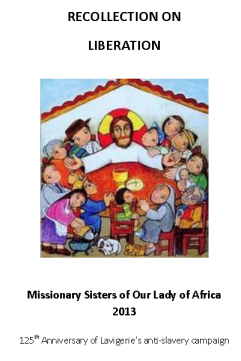
We have just received a document from André Schaminée which you can read below. As attachments, you can also open a letter from Fr. Richard K. Baawobr, M.Afr and Sr. Carmen Sammut, MSOLA inviting us to share a common retreat on the 30th April, feast of Our Lady of Africa. A PDF file of 8 pages will guide you through this recollection. Please, let me know if you prefer a hard copy of this PDF files, as some of you might find it difficult to download it because of poor Internet network. Your Sector Superior may also help you.
Fr. Serge St-Arneault, M.Afr Dear Confreres, To all of you: a good continuation of the celebration of Easter. May this feast be for us and for the whole Church, under the guidance of the new Pope Francis, a nice occasion to renew our faith in Him, who offers us his New Life and who sends us with a Mission of bringing this Joyful News to all those whom we meet in our apostolate. This year our Lavigerie family commemorates the Antislavery Campaign of Cardinal Lavigerie. We have now reached the half-way point of this celebration. Carmen, the Superior General of the MSOLA and Richard, our Superior General, propose to us a recollection on this theme for this month of April. You find their letter and the text of this recollection attached to this e-mail. They can also be found on our website mafrome.org This message is sent to all Provincials and the Delegate Superior. I invite you to let all communities of your Province or Delegation have a copy. It is equally sent to all Formation Houses. Fraternally, André Schaminée
Fr. Serge St-Arneault, M.Afr Dear Confreres, To all of you: a good continuation of the celebration of Easter. May this feast be for us and for the whole Church, under the guidance of the new Pope Francis, a nice occasion to renew our faith in Him, who offers us his New Life and who sends us with a Mission of bringing this Joyful News to all those whom we meet in our apostolate. This year our Lavigerie family commemorates the Antislavery Campaign of Cardinal Lavigerie. We have now reached the half-way point of this celebration. Carmen, the Superior General of the MSOLA and Richard, our Superior General, propose to us a recollection on this theme for this month of April. You find their letter and the text of this recollection attached to this e-mail. They can also be found on our website mafrome.org This message is sent to all Provincials and the Delegate Superior. I invite you to let all communities of your Province or Delegation have a copy. It is equally sent to all Formation Houses. Fraternally, André Schaminée
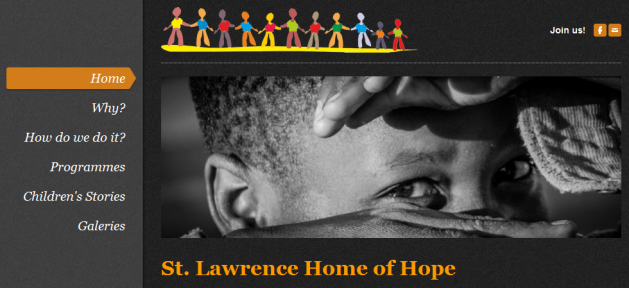 New Website of St. Lawrence Home of Hope
St. Lawrence Home of Hope is a centre for the homeless children and youth where we receive and give shelter to the homeless that are found on the streets of Lusaka.
It has a dual purpose:
1. A rehabilitation centre where we offer a new home and a new start for the children.
2. It is a “half-way home” where we intend to re-integrate the children back in their families, back to their real” homes and main stream society.
The centre was founded in 1998 by the Catholic Women’s League of Lusaka at the request of the then Archbishop of Lusaka. R.R. Medardo Mazombwe. The project was put in their hands in order to respond to the growing numbers of “street children” in Lusaka. They are in charge of advocacy, sourcing funds, developing infrastructure and taking care of the running costs. From its inception the Catholic Parish of Good Shepherd was involved in its establishment, development and running of it as it was within the boundaries of the parish. The first basic structures were built within the property of St. Lawrence Community Centre which was part of the Good Shepherd Parish which, in turn, is in the hands of The Missionaries of Africa.
Our goal is to rescue children from the vicious circle of homelessness (street-drugs-abuse-crime), rehabilitate them and their families and to re-integrate them back into their home environment (when and if possible).
The Website includes:
Why?
How do we do it?
Programmes
Children’s Stories
Galeries
New Website of St. Lawrence Home of Hope
St. Lawrence Home of Hope is a centre for the homeless children and youth where we receive and give shelter to the homeless that are found on the streets of Lusaka.
It has a dual purpose:
1. A rehabilitation centre where we offer a new home and a new start for the children.
2. It is a “half-way home” where we intend to re-integrate the children back in their families, back to their real” homes and main stream society.
The centre was founded in 1998 by the Catholic Women’s League of Lusaka at the request of the then Archbishop of Lusaka. R.R. Medardo Mazombwe. The project was put in their hands in order to respond to the growing numbers of “street children” in Lusaka. They are in charge of advocacy, sourcing funds, developing infrastructure and taking care of the running costs. From its inception the Catholic Parish of Good Shepherd was involved in its establishment, development and running of it as it was within the boundaries of the parish. The first basic structures were built within the property of St. Lawrence Community Centre which was part of the Good Shepherd Parish which, in turn, is in the hands of The Missionaries of Africa.
Our goal is to rescue children from the vicious circle of homelessness (street-drugs-abuse-crime), rehabilitate them and their families and to re-integrate them back into their home environment (when and if possible).
The Website includes:
Why?
How do we do it?
Programmes
Children’s Stories
Galeries
Africa Must Not Forget
No discussion about the abolition of the African Slave Trade in the 19th century can make much sense without recalling the entire four or five hundred year history of the phenomenon itself. What seems to be a widespread, deliberate, though subtle, effort towards collective amnesia in this matter – the inclination to erase out of consciousness and from common memory the experience of slavery, particularly in Africa – makes the obligation to remember a fundamental one. Given the extent and depth of the experience and its consequences on the African continent and its peoples right up to the present, and definitely, as evidence seems to indicate, for the future as well, it baffles the mind, and is actually immoral, that people would suggest that the Slave Trade was merely as “an incident in history,” and that the quicker it is forgotten the better it will be for the continent. On the contrary, it appears much more logical and ethical to insist that the reality of the slave trade and slavery be accorded a more prominent part than has been the case so far, not only in the African civic education system, but also in the process of Christian evangelization and catechesis. READ MORE
by Laurenti Magesa, Hekima College Jesuit School of Theology
and from common memory the experience of slavery, particularly in Africa – makes the obligation to remember a fundamental one. Given the extent and depth of the experience and its consequences on the African continent and its peoples right up to the present, and definitely, as evidence seems to indicate, for the future as well, it baffles the mind, and is actually immoral, that people would suggest that the Slave Trade was merely as “an incident in history,” and that the quicker it is forgotten the better it will be for the continent. On the contrary, it appears much more logical and ethical to insist that the reality of the slave trade and slavery be accorded a more prominent part than has been the case so far, not only in the African civic education system, but also in the process of Christian evangelization and catechesis. READ MORE
by Laurenti Magesa, Hekima College Jesuit School of Theology
 and from common memory the experience of slavery, particularly in Africa – makes the obligation to remember a fundamental one. Given the extent and depth of the experience and its consequences on the African continent and its peoples right up to the present, and definitely, as evidence seems to indicate, for the future as well, it baffles the mind, and is actually immoral, that people would suggest that the Slave Trade was merely as “an incident in history,” and that the quicker it is forgotten the better it will be for the continent. On the contrary, it appears much more logical and ethical to insist that the reality of the slave trade and slavery be accorded a more prominent part than has been the case so far, not only in the African civic education system, but also in the process of Christian evangelization and catechesis. READ MORE
by Laurenti Magesa, Hekima College Jesuit School of Theology
and from common memory the experience of slavery, particularly in Africa – makes the obligation to remember a fundamental one. Given the extent and depth of the experience and its consequences on the African continent and its peoples right up to the present, and definitely, as evidence seems to indicate, for the future as well, it baffles the mind, and is actually immoral, that people would suggest that the Slave Trade was merely as “an incident in history,” and that the quicker it is forgotten the better it will be for the continent. On the contrary, it appears much more logical and ethical to insist that the reality of the slave trade and slavery be accorded a more prominent part than has been the case so far, not only in the African civic education system, but also in the process of Christian evangelization and catechesis. READ MORE
by Laurenti Magesa, Hekima College Jesuit School of Theology
 This new interview with Sarah Augustine opens our eyes to the current and historical harms fueled by the “Doctrine of Discovery”. We are invited to break the chains of all the oppressed, in this case the Indigenous Peoples. Sarah unveils with profound honesty how the Church, perhaps inadvertently, paved the way for the creation of unjust social structures still very much active in today’s world.
Just one month ago, African theologian Laurenti Magesa gave a prophetic conference at Tangaza College (Nairobi) on the occasion of the 125th anniversary of Charles Lavigerie’s anti-Slavery Campaign. In his speech Magesa said that “except for rare cases such as Cardinal Lavigerie, much of Christian evangelization within Africa itself was reluctant to pronounce and declare unequivocally that the Slave Trade and slavery were “intrinsically evil.” Magesa documents the words of Pope John Paul II recognizing and acknowledging this historical oversight in the history of the Church. In John Paul II’s Apostolic Letter of 1994, Tertio Millenio Adveniente (TMA), he openly apologized for what he describes as the “sinfulness” of the Church’s children on this matter. The Pope further noted that “acknowledging the weaknesses of the past is an act of honesty and courage which helps us to strengthen our faith, which alerts us to face today’s temptations and challenges and prepares us to meet them” (TMA 33). It is in this spirit that this interview takes place. We are invited to strengthen our faith as we openly name the “force without a face” behind the “Doctrine of Discovery.”
Sarah invites us to choose life. She says: “To choose Life is to decide with one’s whole being to work on the side of Life, promoting human dignity over financial gain, standing in the way of a juggernaut of endless growth at any cost that Western society defines as mundane, conventional, necessary. To choose life is to stand on the side of the oppressed day after day, even if it means becoming oppressed, because this is what will enable us to retain our humanity, or perhaps experience it for the first time, since all of us are dehumanized by the machines of death.” READ MORE
This new interview with Sarah Augustine opens our eyes to the current and historical harms fueled by the “Doctrine of Discovery”. We are invited to break the chains of all the oppressed, in this case the Indigenous Peoples. Sarah unveils with profound honesty how the Church, perhaps inadvertently, paved the way for the creation of unjust social structures still very much active in today’s world.
Just one month ago, African theologian Laurenti Magesa gave a prophetic conference at Tangaza College (Nairobi) on the occasion of the 125th anniversary of Charles Lavigerie’s anti-Slavery Campaign. In his speech Magesa said that “except for rare cases such as Cardinal Lavigerie, much of Christian evangelization within Africa itself was reluctant to pronounce and declare unequivocally that the Slave Trade and slavery were “intrinsically evil.” Magesa documents the words of Pope John Paul II recognizing and acknowledging this historical oversight in the history of the Church. In John Paul II’s Apostolic Letter of 1994, Tertio Millenio Adveniente (TMA), he openly apologized for what he describes as the “sinfulness” of the Church’s children on this matter. The Pope further noted that “acknowledging the weaknesses of the past is an act of honesty and courage which helps us to strengthen our faith, which alerts us to face today’s temptations and challenges and prepares us to meet them” (TMA 33). It is in this spirit that this interview takes place. We are invited to strengthen our faith as we openly name the “force without a face” behind the “Doctrine of Discovery.”
Sarah invites us to choose life. She says: “To choose Life is to decide with one’s whole being to work on the side of Life, promoting human dignity over financial gain, standing in the way of a juggernaut of endless growth at any cost that Western society defines as mundane, conventional, necessary. To choose life is to stand on the side of the oppressed day after day, even if it means becoming oppressed, because this is what will enable us to retain our humanity, or perhaps experience it for the first time, since all of us are dehumanized by the machines of death.” READ MORE
 This article is dedicated to the pastoral work of Father Bernhard Udelhoven when celebrating Easter and the Holy Week at the village of Malawi in Zambia in 2012 (not to be mistaken with the country of Malawi). See the text written in German published by the magazine Kontinente, March/April 2013, in the supplement section devoted to the Missionaries of Africa, pages IV-V. READ MORE


Rural Basic Needs Basket Analytical report for January 2013 in Malawi shows that the majority of rural households are poor since they are living below a dollar a day.
During the month of February, CfSC’s Rural BNB project conducted a Rapid Rural Appraisal in its operation areas to assess the availability and prices of maize. It was found out that maize prices ranged between MK 7000 and MK 10,000 a bag of 50 kg. This was too much expensive for a rural household. Those who had no or too little maize and money resorted into consuming maize bran. Those who had completely nothing, slept on an empty stomach or could even consume leafy vegetables only. READ MORE
 Press statement published in the Daily Times of 21st March, 2013
 Press statement published in the Daily Times of 21st March, 2013