Author: Missionaries of Africa - Southern Africa Province (SAP) Page 9 of 113

Religious Extremism and Violence in Tanzania

translation-into-german-religioser-extremismus-missio-2By Elias O. Opongo, SJ and Felix J Phiri, M.Afr

In an extensive and critical research about the present religious situation in Tanzania our confrere Felix Phiri [1], the Director of the Islamic studies in the Tangaza University of Nairobi together with Elias Opongo, SJ, the Director of the Hekima Institute of Peace Studies in Nairobi have published a case study about the increasing religious extremism and violence in Tanzania which was proposed and financed by MISSIO Germany.

The authors analyse the situations of conflict in the country: their historical background which evolved into the recent increasing tensions between Moslems and Christians. Through their intensive interaction with Christian and Muslim believers the authors show the many causes of growing radicalism and violence on both sides and the various supports they get for their activities.

But they also outline possible solutions to a peaceful coexistence of the two main religions in the country where approximately 45% are Moslems, 35% Christians and 20% followers of Traditional Religion.

The findings of this research are to a large extent also relevant in looking for a peaceful and hoped for resolution in similar situations in other African countries.

The German edition of this Research is published under “Menschenrechte”, “Religióser Extremismus und Gewalt in Tanzania”. Both the German and the English editions are published by MISSIO Aachen 2016. (ISSN 1618-6222).

[1] Currently the new Provincial of the Southern Africa Province (SAP).

Silver Jubilee of Chimoio Diocese and the blessing of its new cathedral – Mozambique

silver-jubilee-of-chimoio-diocese-10bBy Boris Yabre, M.Afr

On Sunday 12th February, the Diocese of Chimoio celebrated its 25 years of existence by blessing the newly built cathedral. The Bishops of Beira, Maputo and Quelimane together with thousands of Christians who came to express their support to Bishop João Francisco Silota, the first Bishop of Chimoio Diocese and thanking God for this achievement.

In his homily, Bishop Silota presented a financial report of local and foreign contributions for the construction of the cathedral. Before the final blessing, he made public his last will to be buried in the cathedral. “If I died in or outside Mozambique or even in another continent, if nothing prevent it, I would like to be buried in this cathedral.” Then, leaving the altar and going down to the main entrance, he showed in a dramatic manner the place of his future resting place. The successor of Bishop Silota will be enthroned on 12th March 2017. We recommend him to your prayers.

Death of Father Pierre Lemoyne, M.Afr

lemoyne-pierre2-copieFather Gilles Barrette, Provincial of the Americas, informs you of the death o Father Pierre Lemoyne, M.Afr.

He died on February 17, 2017, in Asbestos (Canada), at the age of 90 years of which 63 of missionary life in Zambia and Canada.

Let us pray for the repose of his soul.

Some communities in Zambia where Father Lemoyne lived: Mbala, Kasama, Chipata, Lubushi, Lwena, Ipusukilo, Kapatu, Kantensha, Ilondola, Ndola, Mufulira.

Farewell of the MSOLA Sisters – Regiment Parish, Lusaka, Zambia.

farewell-zambia-feb-2017-22bA farewell Mass was celebrated at Regiment Parish on Sunday, February 12, 2017, to honour the  (MSOLA). Two Bishops were present, namely the Auxiliary Bishop of Chipata, Tr. Rev Benjamin S. Phiri and Bishop of Mpika, Tr. Rev Justin Mulenga together with the Archbishop of Lusaka, Most Rev Thelesphore-George Mpundu. Many Sisters of four Congregations, namely the Sisters of the Child Jesus, the Theresian sisters, the Daughters of the Redeemer and the Bethany Sisters were also present to thank them for the help and formation the MSOLA provided when they were established, like the Theresian Sisters in 1927.

100-years-in-zambia-msolabWere honoured: Sisters Marie-Ange Ndayishimiye, Vickness Nangogo Muleya, Flora Ridder, Victoire Niyonzima and Revocate Kabahuma.

This was the last chapter not written in a book published in 2002 to commemorate 100 years of the MSOLA in Zambia. Altogether, they have been in this country for 115 years. See below presentation of the MSOLA presented by Sister Vickness Nangogo Muleya at the beginning of the Mass which illustrates the variety of ministerial work they did over those years. We ask the blessing of the Lord upon them all as their mission will move to other African countries such as Uganda, Tanzania and Burundi.

Thanksgiving of Service of the Missionary Sisters of Our Lady of Africa in Zambia 12th February 2017.

Today we gather to celebrate the service and presence of the MSOLA in Zambia as well as bidding farewell to you and the country at large.We were founded by Cardinal Lavigerie in the year 1869 in Algeria, a year after founding the Society of Missionaries of Africa (White Fathers). We first arrived in Zambia in 1902 at Chilubula in the Northern Province of Zambia. We have worked in the dioceses of Kasama, Mansa, Chipata, Ndola, Mpika, Lusaka and Solwezi.

From 1902 to 2017 – 115 Years: The sisters have been involved in education, health and pastoral services such as:

  • St. Theresa Girls Secondary School in Chilubula
  • Santa Maria Health Centre in Chilubi Island
  • Minga Teachers Training College and Minga Hospital Eastern Province
  • Lubwe Mission Hospital in Luapula
  • Catechism and home craft centres to mention but a few.
  • We also concentrated on the formation of leaders in the Local Church such as
  • Formation of Small Christian Communities Leaders
  • Catechists
  • Coordinating of On-Going Formation e.g.  at Kalundu Centre
  • Facilitation of chapters for different congregations.

The development of women and youth through programs such as Youth Alive, literacy classes and carried out many other pastoral activities in parishes. We are glad for the privilege to have been part of the formators at the beginning of the:

  • Sisters of the Child Jesus,
  • The Theresian sisters
  • The Daughters of the Redeemer and
  • The Bethany Sisters

Lusaka Archdiocese:

We worked at national level at the Catholic secretariat and Zambia Association of Sisterhood. Apart from that, we initiated small Christian communities, taught at Kabulonga Girls Secondary School and schools of higher education such as University Teaching Hospital School of Nursing and Evelyn Hone College. We served as chaplains at Universities E.g. University Teaching Hospital, University of Zambia, Copperbelt University, etc.

Ministries at Regiment Parish (1966-2017)

We initiated the Xaverians youth movement, Catholic Family Movement, Catholic Action and Legion of Mary, taught religion and catechism in the parish and in the schools, visited the prisons, training of volunteers such as the Zambian Helpers Society, launching of the small Christian community movement in Chilenje and the home-based care.

farewell-zambia-feb-2017-04Presentation of Symbols:

The Candle: the light of Christ that has been the guide to our sisters who lived and were missionaries in Zambia.

The Bible, the word of God is core to evangelisation; the word of God is our source of inspiration and strength to carry on the mission entrusted to us.

Cardinal Lavigerie, the founder of our congregation, was convinced that women have a very important role in evangelisation.

Mother Marie Salome, our first Superior General – stood firm in faith to the challenges of the time to see the congregation flourish.

Our Lady of Africa: from the beginning of the Congregation has entrusted itself under the guidance and protection of Mary Our Lady of Africa.

Zambia: Our land of missions – we have loved and still love Zambia with all its people, land, richness and its challenges; we have loved everything about Zambia.

Message to the Catholic Parishioners of Namushakende, Mongu, Zambia.

Final Farewell for Fr. Robert Lavertu in St. Gabriel’s Parish, Namushakende

Alfred_AwogyaBy Alfred Awogya, M.Afr, Namushakende.

Sunday, February 5, 2017, was an emotional day in St. Gabriel’s Parish, Namushakende, as parishioners gathered to bid farewell to their veteran priest, Fr. Robert Lavertu. After 54 gallant years of zealous service in different parts of Zambia Fr. Robert has been called back home to Canada to continue to serve as a missionary. He made his last missionary journey to the Lozi land on Saturday 04/02/2017 to goodbye the people he loves so much. This was his final farewell because a big farewell was organised for him in 2014 both at the diocese and parish levels when he was transferred to work in FENZA, Lusaka.

Robert presided the Sunday Mass in Namushakende, accompanied by Fr. Alfred Awogya and later went to celebrate Mass in the nearest outstation, St. Theresa’s, Namboata. After a few years out of the Lozi milieu, it’s amazing how he managed to celebrate Mass in Silozi and gave inspiring words to the Christians in his homily on his own missionary vocation and experience in Zambia. People had time to express their sentiments of gratitude to him in dramas, poems and songs. They blessed him in the Lozi traditional way by spitting water on him and offering him profound words of thanks and good wishes for the future.

robert-lavertu-mariage-encounter-cupRobert was part of the pioneer Missionaries of Africa group (together with Frs. Charles Obanya and Henry Byamukama) to arrive in Mongu in 2001 to start Namushakende Parish. He worked as pastoral coordinator of the Diocese for 10 years and later served as Parish Priest in Namushakende for two years. In all these years he has been very close to the people of Namushakende. The people remember him for his zeal and passion for the mission, for his closeness to the people and his simplicity, for his push for self-sustainability and for his passion for the Marriage Encounter Program.

Later on Sunday evening, we organised a small “last supper” for him. The Bishop of the Diocese, Evans Chinyemba and a few priests, sisters and church members joined in the celebration. Again, it was marked by deep sense of gratitude for the selfless work of Robert and his dedication to duty. We will miss him dearly. We pray for him and wish him well in his ministry in Canada. He goes but his words and actions lives on in the hearts and lives of the people of Namushakende and Mongu Diocese at large. Mu zamaye hande mutanga’ Mulena. Mulena a mi etelele shangwe.

With a very limited time left, Robert travelled back to Lusaka on Monday after the celebrations. Upon arrival, he sent the following inspiring words in an email addressed to the parishioners of Namushakende.

robert-lavertu-2014By Fr. Robert Lavertu, M.Afr

Being 80 years old with some health problems, the Superiors of the White Fathers in Canada have asked me to go back home. They will offer me some easier kind of work though I would have liked to continue to remain for a few more years in Zambia. That is why I came this weekend from Lusaka to pray with you here in Namushakende for a last time and offer you my farewell.

I am grateful to you and the Catholics of Namboata with whom we celebrated Mass together yesterday February 1st and could offer my goodbye. I would have liked to visit all the Christian communities of this beautiful parish, but it is not possible for lack of time. Indeed, I must prepare my journey home which will be on 14th February. To you all, dear Catholic parishioners, I offer my farewell and assure you of my prayers. I will always remember you and the happy times I was blessed to spend twelve years with you. May our loving God continue to bless you and help you to grow and give Him witness as His beloved children.

old-resident-permit-bNote: Father Lavertu came to Zambia in 1963 and spent most of his missionary life in the Bemba land speaking Chibemba. But he went to Namushakende in 2002 up to 2014 and learn the Silozi language. To say to least, Father Lavertu accomplished a remarkable life as a missionary and learnt in death local cultures making then an important contribution to denounce the vices of witchcraft. He will also be remembered for his great generosity. We wish him a fruitful mission back home to Canada.

2017 Annual Retreat and Sector Assembly, Lusaka, Zambia.

sector-assembly-2017-01c_pngBy Fr. Frederick Tusingire, Director of Lay Apostolate at Uganda Catholic Secretariat, Kampala, Uganda.

The Missionaries of Africa (M.Afr) are very special to me. They have always been. I was baptised by one of them, raised up spiritually and pastorally by them, did my minor and major seminary studies under their guidance and finally my postgraduate studies in their company and with their assistance. I think the M.Afr have been the most privileged missionaries in impacting my country Uganda and indeed the whole continent of Africa.

Their mission gave the Catholic Church the first African priests in modern times (in 1913), the first African bishop south of the Sahara (1939) and when the pope visited Africa for the first time (in 1969) all the four Ugandan bishops whom he ordained were from the M.Afr mission. I believe more of the 12 bishops were from territories evangelised by M.Afr. No doubt the M.Afr have had a very great impact on the Church in Africa.

sector-assembly-2017-14bSo when I was asked by their Zambia Sector to facilitate their Annual Retreat and preside over their Annual Sector Assembly, I came with mixed sentiments of respect and love. I shared as I could and went back to Uganda even more enriched. My two weeks’ stay in the midst of the members of the Zambia Sector gave me an unforgettable experience. The time I spent with them in the retreat at Kasisi Retreat Centre was a great moment of spiritual renewal. The second part with them was the Annual Assembly at FENZA Centre where their various apostolates and the implementation of their 2016 chapter were discussed. For me it was like participating in an assembly where serious evaluation is made and great strategies are laid. I pray these will be implemented with success.

During my stay in Zambia, I also had time to visit various places of their ministry. I am convinced they still have a great contribution to make for the Church in Zambia and for the continent of Africa. May they continue to tread faithfully in the footsteps of the great apostle Cardinal Lavigerie, of their great ancestors and indeed of our Master, Jesus Christ.

My language course experience and my cultural integration in Saint Gabriel Parish, Namushakende, Zambia.

“Nitabile hahulu kuli nakona kubulela silozi.”

“I am very happy to speak Silozi.”

« Je suis très content de parler le lozi. »

jean-marie-vianney-konda-2016-02_jpegBy Jean-Marie Vianney K. Cishugi, stagiaire.

I came to Zambia in July 2016 to follow the “Welcome to Zambia” introductory course in Lusaka. It was not easy for me to communicate efficiently in English. I made an effort to learn and to practise with people who were willing to help me to improve my English. In fact, I got some help from my brothers who were patient enough to correct my mistakes while speaking.

Then, I came in Barotse Land in Western Zambia on the third week of August 2016 in order to start my apostolic training in Saint Gabriel Parish. I was sent to learn the local language Silozi which is a beautiful one with all its grammatical formulations and verbal richness. While learning it, I was also getting acquainted with the Lozi culture. Amazingly, one must clap his hands (ku bulela niitumezi ni kukambelela) to say ‘thank you’. We were four learners to follow the language course at Limulunda for three months.

I came to realise that I have to humble myself if I want to learn a new language.  It took me few weeks to be able to speak a bit. I struggled a lot with my intonation and it took me a lot of courage. Once in a while, l would join my community at Namushakende on Sunday and visit an outstation of our Parish. Initially, l was afraid and shy to speak but I managed to communicate.

I went to Nanjuca, one of our outstations, for my immersion into the language and the culture. I was nicely welcomed in this village. Some people thought that I was there to interact only with Catholics. Slowly, they discovered that I was there for everyone. Children were happy to be with me. I was eating everything they offered me except tortoise (kubu).

I led the service prayer on Sundays. Everybody, children and parents alike, were praying with me though the majority belong to the United Church of Zambia (UCZ) and the New Apostolic Church. I had the trust of Parents who helped me to practise the Silozi language.

I seized this opportunity to deliver a message from Father Venerato Babaine encouraging parents to send their children to school and live together in peace and harmony with other religions.

I had a very fruitful experience and l owe the people a huge debt of gratitude. During my last days in the village, l was really touched by the generosity of the people who came to bid me farewell. Regardless who they are or where they come from, they offered me few presents. People were sad and some burst into tears when Father Christian Muhineza came to pick me up. I felt sad as I had to go.

I am happy to be with the Lozi people and they are pleased when I speak their language.

Niitumezi kaufela a mina (Thank you all) mi mulimu amitohonolofaze (and God bless you)!

Mafrwestafrica lettre du 02 février 2017

Mafrwestafrica logoAujourd’hui, les Missionnaires d’Afrique de l’Ouest vous proposent de visiter de nouvelles pages sur leur site http://www.mafrwestafrica.net.

Actualités

« Intentions générales et missionnaires 2017 » telles que confiées à tous les croyants pour l’année nouvelle (lire la suite).

« Statistiques Missionnaires d’Afrique au 1er janvier 2017 » le nombre de nos communautés, des missionnaires, les nationalités, et autres chiffres intéressants (lire la suite).

« Niger, Burkina, Mali contre le terrorisme » une rencontre des responsables de ces trois pas pour contrer la violence (lire la suite).

Témoignages 

« Otages d’Arlit et assassinat de 2 français ? » y a-t-il un lien entre ces deux réalités ? Un article à ce propos (lire la suite).

« Au revoir inquiet de la présidente de l’Union Africaine » Nkosazana Dlamini Zuma. Mentionnant violences extrémistes de toute sorte, les actes de terrorisme, le crime international, les mouvements des populations à travers le monde (lire la suite).

« Que le NEPAD élargisse ses compétences », ce qu’en pense Ibrahim Assane Mayaki, qui en est responsable depuis 2009 (lire la suite).

Dialogue interreligieux

« Quel dialogue réellement ? » Caritas Europe mentionne l’islam à deux reprises dans son rapport, et le fait que le dialogue n’est pas suffisamment pris en compte (lire la suite).

« Les religions dans les medias en Algérie » L’Autorité de régulation de l’audiovisuel (ARAV) en Algérie a lancé un rappel des règles de traitement du fait religieux (lire la suite).

« Deux états : Palestine et Israël », telle est l’orientation souhaitée par les évêques d’Europe, dans leur rencontre du 14 au 19 janvier 2017 (lire la suite).

Justice et Paix

« Côte d’Ivoire : les évêques expriment leur inquiétude » au sujet de la situation politique actuelle dans leur pays (lire la suite).

« Le festival d’Angoulème dénonce l’injustice en Afrique » tout particulièrement par un auteur malgache et un autre congolais (lire la suite).

« Procès en Côte d’Ivoire » c’est seulement six ans après les faits que s’ouvre le procès des disparus du Novotel d’Abidjan (lire la suite).

« Gambie : Ousman Sonko sera-t-il poursuivi pour crimes contre l’humanité ? » une procédure dont Trial International serait à l’origine (lire la suite).

Vu au Sud – Vu du Sud

« Côte d’Ivoire, sortie de crise ? » c’est la question qui se pose même si une évolution positive semble prendre place dans ce pays (lire la suite).

« Gambie, retour de Adama Barrow » Le chef de l’état est enfin rentré au pays après de nombreuses questions se posant au sujet de son retour, et l’exil de son prédécesseur (lire la suite).

« Manger « Burkinabè » ! » le gouvernement burkinabè ordonne aux services publics de prioriser les produits alimentaires locaux (lire la suite).

« Le Maroc de retour à l’UA » discours historique du Roi du Maroc suite à l’acceptation de l’adhésion de son pays au sein de l’UA après une longue absence (lire la suite).

« Qui succédera à Alassane Ouattara en 2020 ? » une question qui n’est pas évidente, mais il semble que l’actuel président est plutôt favorable à  Amadou Gon Coulibaly et Daniel Kablan Duncan (lire la suite).

Vigil of Prayer: International Day of Prayer and Awareness against Human Trafficking, February 8, 2017

vigil-of-prayer-human-traffickingHow can we ignore this severe warning when we see the exploitation carried out by unscrupulous people? Such exploitation harms young girls and boys who are led into prostitution or into the mire of pornography; who are enslaved as child labourers or soldiers; who are caught up in drug trafficking and other forms of criminality; who are forced to flee from conflict and persecution, risking isola­tion and abandonment.

Moreover, the dividing line between migration and traf­ficking can at times be very subtle. There are many factors which contribute to making migrants vulnerable, especially if they are children: poverty and the lack of me­ans to survive – to which are added unrealistic expecta­tions generated by the media; the low level of literacy; ignorance of the law, of the culture and frequently of the language of host countries. All of this renders children physically and psychologically dependent. But the most powerful force driving the exploitation and abuse of chil­dren is demand. If more rigorous and effective action is not taken against those who profit from such abuse, we will not be able to stop the multiple forms of slavery where children are the victims.

Facts:

  • Worldwide there are 168 million children in child labour. More than half of them, 85 million, are in hazardous work. (ILO)
  • 20 million child workers are employed in fac­tories that make garments, carpets, toys, ma­tches and hand-rolled cigarettes. Agriculture remains by far the most important sector where child labourers’ can be found (98 million, or 59%), but the problems are not negligible in services (54 million) and industry (12 million) – mostly in the informal economy. Most children work in farms that produce consumer products such as cocoa, coffee, cotton, rubber and other crops. (ILO)
  • Asia and the Pacific still have the largest numbers (almost 78 million or 9.3% of child po­pulation), but Sub-Saharan Africa continues to be the region with the highest incidence of child labour (59 million, over 21% of child population). (ILO)
  • There are 13 million children in child labour in Latin America and the Caribbean. In the Middle East and North Africa there are 9.2 million. (ILO)
  • Every year, 22,000 children die in work-re­lated accidents. 9% are in industry, including mining and quarrying, manufacturing and con­struction. (ILO)
  • The number of children involved in armed conflicts has increased to about 300,000 over the past decade. 14 is the average age of a child soldier. 40 % of child soldiers are girls. (ILO)
  • 2 million children are subjected to prostitu­tion in the global commercial sex trade (UNICEF)
  • Millions more children are likely exploited in prostitution or pornography each year around the world, most of the time lured or forced into these situations through false promises and li­mited knowledge about the risks.(UNICEF)
  • About 1 in 10 girls under the age of 20 have been subjected to forced sexual intercourse or other forced sexual acts at some point of their lives. (UNICEF)

kids-are-not-slaves-02Message from Pope Francis:

“Dear brothers and sisters, today, 8 February, the liturgical memorial of St. Jo­sephine Bakhita, a Sudanese Sister, who as a child had the traumatic expe­rience of being a victim of trafficking, the International Union of Superiors Ge­neral of Religious Institutes have promoted the Day of Prayer and Reflection against trafficking in persons. I encourage all those who are committed to hel­ping men, women and children enslaved, exploited, abused as tools of pleasu­re and often tortured and mutilated. I hope that those who have responsibili­ties in government will seriously strive to eliminate the causes of this shameful scourge, a scourge unworthy of a civilized society. Let each of us be committed to being a voice for our brothers and sisters, humiliated and deprived of their dignity. Let us all pray together.

Prayer:

O God, when we hear of children and adults being deceived and taken to unknown places for purpo­ses of sexual exploitation, forced labour, and organ ‘harvesting’, our hearts are saddened and our spi­rits angry that their dignity and rights are ignored through threats, lies, and force. We cry out against the evil practice of this modern slavery, and pray with St. Bakhita for it to end. Give us wisdom and courage to reach out and stand with those whose bodies, hearts and spirits have been so wounded, so that together we may make real your promises to fill these sisters and brothers with a love that is tender and good. Send the exploiters away empty-handed to be converted from this wickedness, and help us all to claim the freedom that is your gift to your children. Amen

they-are-just-children-not-slaves

February 8, 2017 – Liturgical Memory of St. Bakhita: http://preghieracontrotratta.org/

josephine-bakhita

Life of Josephine Bakhita: See PDF file HERE.

Statistics Sources:

http://www.theworldcounts.com/stories/Child-Labor-Facts-and-Statistics

Marking progress against child labour – Global estimates and trends 2000-2012 (ILO-IPEC, 2013).

http://www.humanrights.gov/the-facts-on-child-soldiers-and-the-cspa.html  ( USA)

http://borgenproject.org/10-child-labor-facts/

https://en.wikipedia.org/wiki/Child_labour

http://www.answers.com/Q/What_are_facts_about_child_labor#slide=1

Source: National Crime Agency (2014) UK

Present Magazine, December 2016 – A Newsletter for the Candidates and Students of the Missionaries of Africa, Zambia.

12-present-magazine-dec-2016-logoGreetings from Kolibo and may the Lord be with you always! Merry Christmas and a happy New Year 2017!

pre-mag-dec-2016-01-copieChristmas is a time for us Catholics to rejuvenate and gain more strength to follow Christ the Saviour and the Redeemer of the world. Jesus, the Son of God, has come to free the world from its bondage of sin and corruption. The Light has come into our darkened and broken heart. May this Light shine evermore in us throughout 2017!

2016 has been a very busy in the Office of vocation promotion in Zambia coinciding with the 125 anniversary of the Catholic Faith in Zambia under the theme: “Planted in our families!” It began with the coming of the Missionaries of Africa in Mambwe-Mwela in July 1891 currently situated in the Archdiocese of Kasama. The official opening of the 125 years commemoration took place on the 6th August on the very same spot when the first Missionaries planted their tents.

This year has been a blessing for our Sector of Zambia with the perpetual Oath and Ordinations of Brother Sense Moses Simukonde and Brother Elvis Ngandwe respectively on April 30 in Nairobi, Kenya, and July 2 in Chingola, Zambia. From St Paul Nchelenge parish, Mansa diocese, Fredrick Mulenga together with Martin Kasongo from St Stephen parish Chingola, Ndola diocese were ordained Deacons on 10th December 2016 in Abidjan, Ivory Coast.

Rev. Fr. Sylvester Chimenge cardPRIESTLY ORDINATIONS:

On the 06th August in the Cathedral of Ndola, Fr. Sylvester Chimenge was ordained Priest. He celebrated his thanksgiving mass on the 07th August in Chibuluma Parish. The parish priest and his council made it a joyful lively celebration. A good number of Missionaries of Africa and a White Sister were present to grace the event. Fr. Chimenge is now in Tanzania for his missionary ministry.

robbin_simbeye

On the 19th November at St Monica in Kabwe, Fr. Robbin Simbeye was ordained Priest. The Bishop had combined the closing of the Jubilee Year of Mercy and the ordination. Many people came to attend the celebration. The following day, in the same parish, He celebrated his thanksgiving mass full of joy and jubilation. Fr. Robbin is going to Tunisia (North Africa), for his missionary work.

ON APOSTOLIC TRAINING (Pastoral): We have 4 zambian students who are on pastoral; Rodgers Mwansa (from Mazabuka) in Tanzania; Biness Chungu (from Chingola) in Niger; Emmanuel Banda (from Katete) in Niger and Grant Chansa (from Luanshya) in Mali.

SPIRITUAL YEAR (Noviciate): In July 2016, we escorted Leonard Katulushi from Sacred Heart parish, Kabwe to Bobo-Dioulasso in Burkina Faso. He has received the habit on the 22 October 2016. Blessed spiritual journey!

pre-mag-dec-2016-04OUR STUDENTS IN PHILOSOPHY: They are 10 who are studying philosophy in Balaka (Malawi). They are happy and are progressing well in their studies. 3rd Years: Evans Mwila (Ndola), Horris Banda (Katete), Ivor Mutamba (Lusaka). 2nd Years: Darious Mwape (Mansa), Kelvin Mutalala (Chingola), Louis Kangwa (Kasama), Sandram Mwanza (Mukushi), Vincent Mutale (Chongwe). 1st Years: Enest Katema (Mansa), Peter Nkhoma (Chipata).

KOLIBO VOCATION CENTRE

The vocation and missionary animation is a busy office where correspondance with aspirants all over Zambia is done from. The address is still the same over 26 years now. We thank God for his grace of vocation in Zambia

pre-mag-dec-2016-05THIS YEAR WE HAD 3 PROGRAMS OF COME AND SEE.

The group of April (1st to 13th) in Serenje, I was helped by Fr. Frederic, parish priest of St Lawrence (Lusaka): Embarking for a pic-nic, last day before the departure. They are from Lusaka, Mongu, Kasama, Kapiri-Mposhi, Chingola, Kitwe, Mpika. Extreme left, Fr Frederic, and Extreme right Fr Camillo.
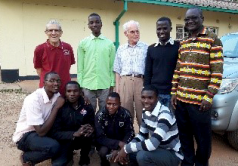
pre-mag-dec-2016-07The group of August (15th to 27th) in Lavigerie formation centre Chipata: From Kitwe, Chingola, Lusaka, Serenje, Kasama, Nchelenje; With Frs Jean Luc Gouiller and Henk van Kessel.

The group of December (16th to 22nd) in Serenje was a program for those who have completed Grade 11 and are now going to Grade 12. This is to encourage and journey with our
pre-mag-dec-2016-09aspirants for a good period of time as they discern their vocation. I was helped by Innocent Majune Stagiaire in Serenje.

CHIPATA PRE-FIRST PHASE IS KNOWN AS LAVIGERIE FORMATION HOUSE CHIPATA don’t miss it when passing along the Chipata Malawi border, 6,5 Km from town. We have 07 students from Zambia. 

Wishing you God’s blessing!

OPEN HERE THE PDF FILE OF THIS NESWLETTER

Page 9 of 113

Powered by WordPress & Theme by Anders Norén