Author: Missionaries of Africa - Southern Africa Province (SAP) Page 8 of 113

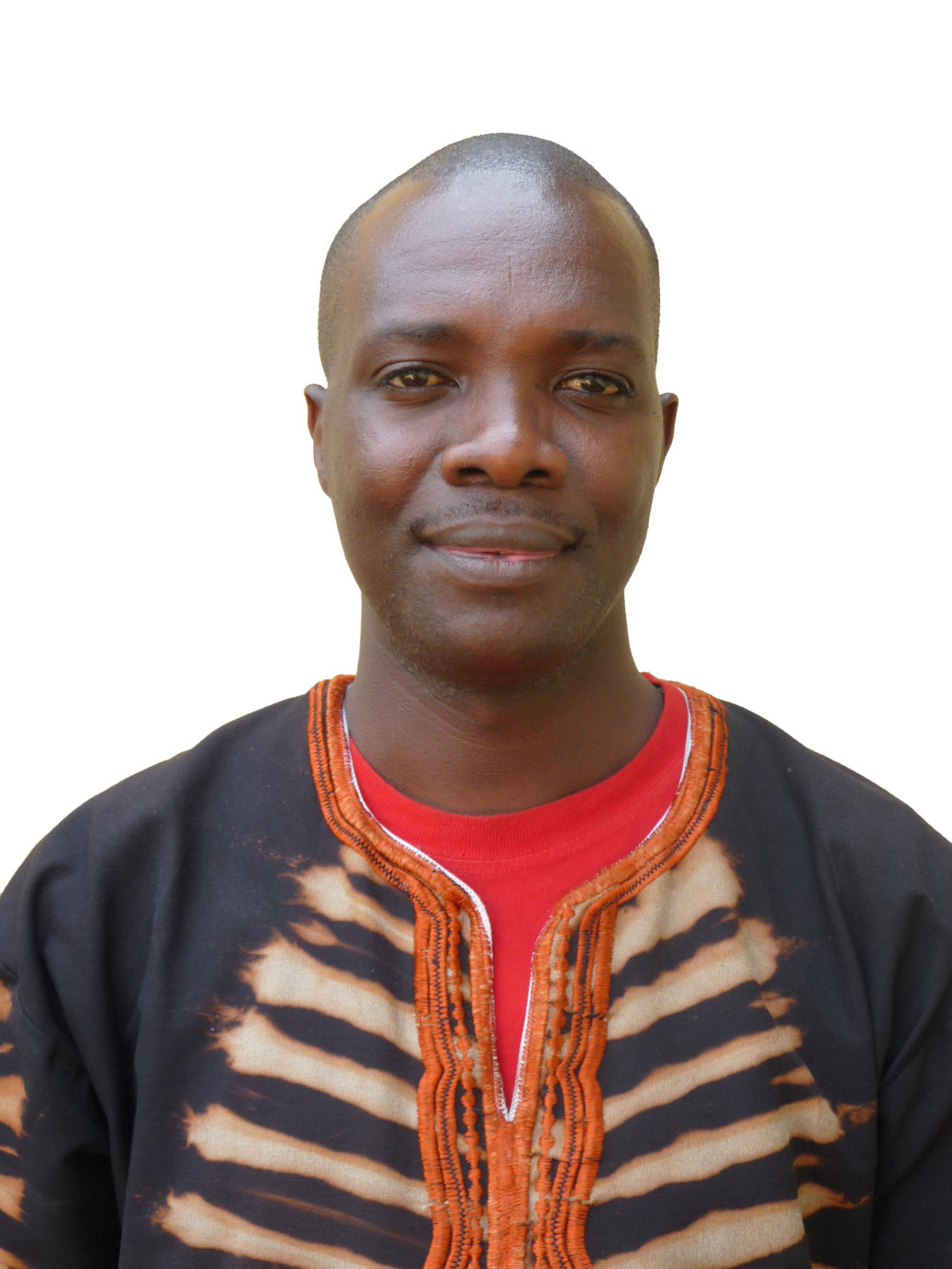
Return to the Lord of Brother Willem (Wim) van Dijk, M.Afr

willem-van-dijkBrother Willem (Wim) van Dijk return to the Lord of on Saturday the 18th of February 2017 at Heythuysen (Netherlands)at the age of 90, of which 30 years of missionary life in Zambia and 36 years in the Netherlands. Let us pray for him and for his loved ones.

Milestones of Brother Wim van Dijk’s life: Brother Wim van Dijk was born on the 20th of November 1926 at Tilburg in the Diocese of ‘s-Hertogenbosch. He began his Spiritual Year at ‘s-Heerenberg on the 7th of September 1946, where he took his Temporary Oath on the 17th of September 1948 and his Final Oath on the 7th of August 1954.

25/03/1960

from Lubushi to Lusaka Zambia

09/09/1963


Ilondola, Diocese of Mbala

Zambia

01/01/1968

Parish

Ilondola, Diocese of Mbala

Zambia

01/01/1977

Maintenance

Lubushi Seminary

Zambia

01/01/1987

Maintenance

Mansa, Diocese of Mansa

Zambia

01/01/1988 Services Lubwe, Diocese of Mansa

Zambia

09/03/1990 Services Kasaba, Diocese of Mansa

Zambia

South Africa Sector Post Cap Deliberations – Formation House in Merrivale, KwaZulu/Natal

Spirituality-Charism-Community-Mission-Service

post-cap-feb-2017-01cThe South Africa Sector held its Post Capitular Assembly from Tuesday 14th February till Thursday 16th February. We thank especially Fr. Bill Turnbull, M.Afr., from the Malawi Sector for preparing our documents and for guiding us all through our Post Cap. Bill put a lot of effort into this event.  He focused primarily on our fundamentals and foundation as Missionaries of Africa: our Spirituality-Charism and Community living, then looked at our Mission, with all its complexities of pastoral insertion; placing ourselves at the service of Africa at the existential peripheries; encountering and dialoguing with others, especially other faiths and Islam; addressing issues of poverty, corruption, land, racism and migrants, justice & peace and ecology.  Even though we had three full days, it wasn’t enough to really address and process the issues affecting us in our mission here in South Africa. Despite our very diverse cultures, languages and ages etc., we could sense a real unity of purpose and direction in the spirit of the Chapter. We look forward to the final Provincial Strategic Plan to come from the upcoming Provincial Council to be held in a couple of weeks’ time. 

Father, Son & Holy Spirit Guide Us

At the opening on Tuesday morning, following the Chapter’s example, we held a small ceremony of the lighting of candles which remained lit for the duration of our Post Cap. The candles represented the Father, Son and Holy Spirit, the Triune God, and we prayed this God guide us, and keep us united, through our sharing’s, discussions and deliberations. Bill composed three prayers which were read out as each of the three candles were lit. Each morning, as we opened our discussions, these candles were lit.

Ecological – ‘Paperless-Digital’ Gathering

One significant change of this Post Cap and the general Sector Meeting, which was held on the Monday before (13th Feb), was that we had a ‘paperless’, or ‘digital’ Post Cap. Basically, the only paper we used was the actual Chapter document itself. This was a first for our Sector and we will continue to be ecologically sensitive to how we run our meetings and gatherings. Everything was done on computer, using flash drives and projecting our documents onto a large screen. Feedback was done by a group spokesperson or secretary who typed up everything onto the group flash drive. This was then given to the moderator and to the Post Cap secretaries. We are happy that during this Post Cap we could begin to implement the call to be more ecologically sensitive.

Nkosi sikeleli Afrika

We pray for our Province of SAP, and we pray for each of the four Sectors. May we each be true witnessing Apostles and good stewards in our mission and service of Africa where we are – and may our Mother Mary, Queen of Africa, guide and direct all our actions to and through her beloved Son, our Lord Jesus Christ. May His Kingdom come.

Bishop’s Lenten Message 2O17 from +Patrick Chisanga, OFM Conv

ash-wednesday-pngSpiritual Warfare against Evil Intensified: Ba Minshioni Ba Lelo Nifwe.

Dear Brothers and Sisters in Christ,

  1. On 1st March we begin the Season of Lent – the intensive 40 days’ spiritual journey towards that great summit of our Christian faith and worship: the annual celebration of the Resurrection of Jesus from the Dead, the ultimate victory of good over evil.
  2. The Word of God that is proclaimed during the liturgical celebrations of the subsequent five Sundays (Year A) have a particularly rich pedagogical character that guides catechumens towards the waters of baptism and general Christian Initiation on the Easter Vigil. All the faithful must equally endeavour to draw maximum benefit from the wealth of these carefully selected passages, in view of their own solemn renewal of the baptism promises during the same Easter Vigil and in order to be spiritually recharged for the ongoing battle against temptations and sin.

The Sunday Gospel passages that will lead the way during this Lenten itinerary include: (1) The Temptations of Jesus – Matthew 4;7-17, (2) The Transfiguration of Jesus – Matthew 17:1-9, (3) Jesus’ Encounter with the Samaritan Woman at the Well – John 4:5-42, (4) Jesus’ Healing of the Man who was Born Blind – John 9:1-42 and (5) Jesus’ Raising of Lazarus from Death – John 11:1-45.

As you may notice, the last three passages from the Gospel according to John are quite lengthy. However, with adequate preparation, these Readings may be proclaimed using the role-play format, as is done on Palm Sunday and Good Friday. The priest and selected faithful could take the respective roles of Jesus and other individuals in the passage. By so doing and, when done diligently, this manner of proclamation enables the congregation to follow with greater attention.

I invite all priests to carefully meditate upon these Readings during this whole period of grace so as to be able to deliver a fitting message to the faithful during the celebration of the Eucharist. Furthermore, in view of the so many Centres that still do not have priests on Sundays, I ask all parish priests to ensure that there is sufficient prior preparation of the prayer leaders and/or catechists who are selected to comment on the Word of God during the Sunday worship in their respective outstations.

In addition, I enclose, with this letter, the Lenten homily notes that the JCTR has graciously shared with us. Let them be further distributed to the Small Christian Communities (SCC), Lay Groups as well as individuals for further reflection and appropriate action that is inspired by the Word of God.

  1. This year’s Lent coincides with the Pastoral Theme in our Diocese according to which we celebrate the ministry of the pioneer missionaries and declare that “We are the Missionaries of Today” (Ba Minshioni ba Lelo, Nifwe). Let us recall the sacrifice, availability and pastoral zeal of our gallant pioneer missionaries and in turn make a commitment to the effect that their works will live on through each one of us. Indeed, the Church, in Mansa Diocese, shall continue to announce the Good News to all creation, in obedience to the great commission of our Lord Jesus (Mark L6: 15).
  2. To rekindle this missionary zeal, the Lenten Season offers us the instruments of Prayer, Fasting and Almsgiving according to the guidance of Jesus, as proclaimed in the Gospel passage of Ash Wednesday (Matthew 6:1-6,16-18). These three pillars of Lent, when taken seriously, have the capacity to bring about lasting positive change in our lives, especially in overcoming the sinful habits that we repeatedly struggle with. I invite each one of you to pray, fast and give alms with the intention of being liberated from any such demeaning slavery.

Furthermore, in order to intensify our spiritual warfare against evil through combined effort and, in response to the appeals made during the Pastoral Council Meeting last October, I again invite the faithful in all our parishes to observe the “24 hours for the Lord” on the Friday to Saturday of the 3rd Week of Lent (24 – 25 March). Let this day be flooded with prayers, songs, Eucharistic adoration, catechesis and actual celebration of the Sacraments of Reconciliation and the Eucharist. lt would be fitting that this special day concludes with the joyful Eucharistic celebration of the solemnity of the Annunciation of the Lord on Saturday, 25th March.

I implore you, my dear brothers and sisters in the Diocese, to take the invitation seriously and spare this ’24 hours’ exclusively for the Lord. Bring to this special period of intense prayer the needs of our society and individual members for healing from anger, guilt, unforgiving heart, drunkenness, sexual immoralities, pride, selfishness, etc. Through this prayer, let us also invoke Divine intervention to end the ongoing violence against the sanctity of human life, the values of marriage and family as well as the integrity of God’s creation.

  1. May the grace of our Lord Jesus Christ, the love of God the Father and the communion of the Holy Spirit be with you. I wish you a fruitful and grace-filled Lenten Season 2017.

Given on this First Day of March in the Year of the Lord 2017, the Ash Wednesday

The role of women in evangelisation and sustainable development in Kasamba, Zambia.

Benjamin-Itungabose-2014

Benjamin Itungabose

By Benjamin Itungabose, M.Afr

We had a gathering of all the leaders of the Catholic Women’s Organisation in Kasamba Parish two weeks ago. Were present the leaders of this lay group from each outstation. Those who came to animate the gathering were from the Diocese. The women shared about their role in the family and the Church. The main point on the Agenda was the “Seminarian Fund.” The leaders from the Diocese explained to them the aim of this Fund and the prime role that women have to feed it. Women have always been at the forefront in the education of children. Hence forming the future ministers of the Church is a responsibility of every Catholic woman. The leaders of the different outstations of our Parish were encouraged to go back to their respective Centres to sensitise all Catholic women to make their contribution. Each Catholic woman is required to pay 10 kwacha ($1). Those who participated in the gathering paid their contribution on the spot.

Besides the Seminarian Fund, the women were also given lessons on entrepreneurship. The diocesan treasurer together with the diocesan chairperson of the Catholic Women’s Organisation in Mansa Diocese taught them how to start and manage a business. Those who attended the lessons were absolutely delighted. The aim of the lessons was to encourage women to work hard in order to care for their families and the Church. At first they were worried about how to find a capital to start a business. But they were reminded that God has already given us the most valuable capital which is the land. This was a revelation which struck all the attendants. They went back home enlightened and ready to start working hard for a sustainable development of their families and the Church.

South Africa Budget 2017: An economic or spiritual matter?

budget-safr-russell-pollittBy Russell Pollitt SJ

Finance Minister Pravin Gordhan made a strong call to conversion in his 2017 Budget Speech. Quoting Pope Francis he said, “Reforming the social structures which perpetuate poverty and the exclusion of the poor first requires a conversion of mind and heart”. He went on to say, “We need to radically transform our economy so that we have a more diversified economy, with more jobs and inclusivity in ownership and participation”.

There is no doubt that South Africa is sitting on a fast-ticking social time bomb. Crunching numbers and good fiscal control alone will no longer keep the wolves at bay.

Gordhan’s Budget Speech alluded many times to key themes in Catholic Social Teaching (CST): option for the poor, trust, solidarity, human dignity, the call to community, responsibility and accountability. The 2017 Budget pointed to a bigger problem which is not simply economic: at the heart of South Africa’s woes is a spiritual crisis. We must build a true community of kinship. This is our strongest antidote to the crisis.

It is tempting to look at the figures presented in the Budget and notice the ways in which I am affected. Petrol will rise by 39c, alcohol and cigarettes by between 6%-10%, those who earn more will pay more tax on a sliding scale. But it would be short-sighted (and maybe even selfish) to stop there. The bigger picture is essential and, it seems, that’s exactly what Gordhan chose to paint this year.

South Africa can no longer afford to allow a few to live extravagant lives while millions live below the poverty line with little or no hope for their future or that of their children. The country can no longer allow leaders to feather their own nests. It can no longer allow corporates and multinationals to avoid tax liabilities.

Difficult global economic and political conditions notwithstanding, it is personal and social transformation which will empower us to live with social and moral integrity. Transformation is a term which is often used in political rhetoric. It is, however, theologically rich and, in that sense, might save us from a pending social and economic crisis. Transformation is not political. It points to a systemic re-ordering and re-prioritising where it counts most: morally.

Towards the end of the Budget Speech Gordhan paraphrased what he said last year. He urged us to make right choices and do the right things so that we build a just and fair society, founded on the principles of human dignity and equality. He asked activists, workers, the business community, clergy, professionals and citizens to actively engage in shaping the transformation agenda so that we do realise a just and equitable society –a society founded on kinship.

The bottom line is that if we want prosperity and peace we must submit ourselves and our lives to transformation, to living a key Gospel truth: we are our brother and sister’s keepers.

We have a collective and social moral responsibility to build the society we want to live in. When we take that responsibility seriously then a community of kinship begins to emerge.

We would do well too if we recall that uncomfortable yet piercing Gospel truth: “To whom much is given, much will be required.” (Luke 12:48)

Follow Russell Pollitt on twitter @rpollittsj

(C)2017 Jesuit Institute South Africa

The Jesuit Institute – South Africa undertakes to ensure the integrity of personal information in its possession or under its control by taking appropriate, reasonable, technical and organisational measures to prevent loss of, damage to or unauthorised destruction of personal information and unlawful access to or processing of personal information.

SAP Young Confreres meeting in FENZA, Zambia.

young-confreres-feb-2017-02-jpegSAP Young Confreres are meeting in FENZA, Zambia, to share their experiences as missionaries. They all have a few years of ministry and full of zeal. The participants are: Remacle Lamec Ciza from Henley-KwaMphumuza, South Africa, Frank Mbala Kalala from Sussundenga, Mozambique, Benjamin Itungabose from Kasamba, Zambia, Mathew Banseh from Lumimba, Zambia, Douglas Moumanyi Ogato from Serenje, Zambia, Lawrence Tukamushaba from Kasama, Zambia, Africano Mucunguzi from Mua, Malawi, Emmanuel Barongo from Kanengo, Malawi, Alain Christian Muhineza from Namushakende, Zambia and Jean-Bosco Nibigira from Dombe, Mozambique.

Animators: Deogratias Ngowi from Merrivale, South Africa and Justin Sebakunzi from Lua-Luo Spiritual Formation Centre, Zambia. Also on the picture: Felix Phiri, SAP Provincial.

We celebrate our 150th Anniversary!

A short history.

The Society of the Missionaries of Africa (M.Afr) was founded in Algeria, in 1868 by Cardinal Charles Lavigerie, Archbishop of Algiers; he would later be-come Cardinal Lavigerie (July 1882). From the beginning, this new missionary society took the Arab dress: the “gandoura”, with, as a religious sign, a rosary worn like a necklace. This earned them the name “White Fathers”. One year later, in 1869, Cardinal Lavigerie also founded the Congregation of the Missionary Sisters of Our Lady of Africa (MSOLA). Today, there are 1,232 Missionaries of Africa, from 37 Nationalities, working in 42 Countries, 22 of which are in Africa. They live in 217 communities; with a further 486 candidates at various stages of formation.

150-anniversary-m-afr-logo-saSouth Africa.

At the request of the Malawi Catholic Bishops’ Conference, in 1969 the Missionaries of Africa finally came down to South Africa in order to minister to the 70,000 Malawian migrants working in the lucrative mines around Johannesburg, Rustenburg and Witbank. The Malawian Catholic Mine Chaplaincy soon became the Catholic Mine Chaplaincy as the first missionary communities answered the call of all migrant mine workers, drawn from the neighbouring countries, to have a Catholic presence in their mine. Twenty years later the mine chaplaincy was integrated into each Diocese, through parish structures.

Our commitments over the years.

As the Missionaries of Africa became more known; new requests for communities were sent to the General House in Rome. The response was positive, and in rather quick succession, missionary communities were founded in Bethlehem Diocese: Phuthaditjhaba/Qwaqwa and eventually Bohlokong; in Pretoria Archdiocese in the KwaNdebele region: Tweefontein, Siyabuswa and Diepsloot; in Witbank Diocese: Kamhlushwa, Malelane and eventually KwaGuqa; in Johannesburg Archdiocese: Soweto (Zola, Zondi, Emdeni and Protea North), Orange Farm, and later, Lenasia.

From 1998 to 2004, three of our Missionaries ran the Lumko Institute in Benoni. The most recent insertion is a formation house in Durban Archdiocese: Merri-vale has more than 30 theology students from various African countries who study theology at Cedara St. Joseph Institute. Furthermore, we have two parishes near Pietermaritsburg: Henley and KwaMpumuza. Our students enjoy going there for their weekend apostolate.

A community in Edenglen, Johannesburg, acts as a hub for administration and vocation animation, while welcoming many visitors. At the same time, the priests of this community offer much appreciated services to local parishes, groups, schools and religious communities of that area and beyond.

And the mission goes on…

In their almost 50 years in South Africa (2019), the Missionaries of Africa living in communities, have tried to respond to requests for primary evangelisation, and moving on when the local Church has been established. Due to dwindling numbers and the maturity of the local Church in South Africa, today communities are found in the formation house in Merrivale, Henley,  KwaMpumuza, Bethlehem, Lenasia and Edenglen; 17 confreres in all.

The contribution has been modest but sincere; a missionary effort to building a vibrant local Church. The presence of a Formation House bodes well for the future and will ensure a Missionaries of Africa presence in South Africa for the foreseeable future.

We sincerely hope and pray that this Jubilee celebration will finally arouse in some young men the desire of a true vocation as Missionaries of Africa. What a wonderful gift from the South African Church this would be to us! Please, pray for us!

With God’s blessings.

Missionaries of Africa, P.O. Box 10057, Edenglen 1613, South Africa. Tel: 011 452 5283.

SACBC Justice and Peace Commission in South Africa Calls for a More Effective Regulation of Banks.

sacbc-jnp-logobishop-a-gabuzaBishop Abel Gabuza, the chairperson of SACBC Justice and Peace Commission, has called on the Parliament’s Standing Committee on Finance to consider further regulation of banks if the banks are found guilty of collusion by the competition tribunal.

“If the tribunal confirms commission’s findings, we urge the treasury and the standing committee on finance to institute more effective regulation of banks, in furtherance of the common good, to prevent further market abuse.” Says Bishop Gabuza.

According to Bishop Gabuza, this should include efforts to speed up the finalisation of the Financial Regulation Bill. “We particularly insist on the establishment of the market conduct regulator.” 

Bishop Gabuza has commended the standing committee on finance for its efforts to appraise the concentration levels in the banking sector. 

“In any sector, when too much power is concentrated in too few hands, the biggest losers are often the poor and low income earners. In so far as it is undertaken in a manner which is consistent with international benchmarks and the interests of the poor, we support government efforts to break the dominance of South Africa’s largest banks and increase access to the economy.”

Bishop has also called for stronger culture of ethics in the banking sector. “The bank collusion is a reminder that we need to strengthen ethical infrastructure in the financial sector. We are often worried that, since the banking sector is important for increased investment and faster economic growth, it is often treated as if it is a sector that should be above ethics and the law. Just like other sectors, the banking sector should be subjected to ethical imperatives and regulatory frameworks that promote the common good. Profit making and greed should not be the only guiding principles.” Added Bishop Gabuza.

SACBC Justice and Peace Commission “shall continue to speak out against corruption in the financial sector, with the same vigour that we use when we condemn corruption in the public sector. Both private sector corruption and public sector corruption arise from the spirit of greed and the worship of money. Both constitute stealing from the poor. Both divert resources necessary to uplift the poor from poverty and destitution. We shall not therefore remain silent in the face of any corruption and fraud.”

Click here to open the PDF file of this document.

For further information, kindly contact:

Bishop Abel Gabuza. Cell number:  0825494324  –  Phone number: 053 831 1861 or 053 831 1862. Email: dagabuza@gmail.com

Archbishop William Slattery: Cell: 0834685473

Mafrwestafrica lettre du 21 février 2017

Mafrwestafrica logoAujourd’hui, les Missionnaires d’Afrique de l’Ouest vous proposent de visiter de nouvelles pages sur leur site http://www.mafrwestafrica.net.

Actualités

« Relais Pères Blancs Maghreb janvier 2017 » la dernière édition disponible de cette revue qui nous informe sur l’Eglise en Afrique du Nord (lire la suite)

« Les missionnaires d’aujourd’hui » même s’ils ont la même mission, ne se présentent plus de la même manière que par le passé (lire la suite)

Témoignages 

« Les congrégations missionnaires africanisent leurs structures », étant de plus en plus dirigées par des africains (lire la suite)

« Jubilaires 2017 chez les missionnaires d’Afrique », les noms de ceux qui célébreront cette année de 25 à 75 ans de serment missionnaire… (lire la suite)

« Nombre de migrants en évolution » le partage de l’expérience des migrants recueilli de par le monde et très enrichissant (lire la suite)

« Le pape pour la journée mondiale du malade » l’intégralité du message du pape François à ce propos (lire la suite)

Dialogue interreligieux

« Social et religieux chez les musulmans » Lire l’interview de Didier Leschi par Walid Mebarek : l’action de l’état a atteint ses limites (lire la suite)

« Nombre et répartition des musulmans dans le monde », un article de Marc Gaborieau, anthropologue auteur de ‘’ Un autre islam : Inde, Pakistan, Bangladesh’’ (lire la suite)

Justice et Paix

« Le pape contre la traite des enfants » tout particulièrement en cette date du 8 février, qui est aussi la fête de Sainte Bakhita (lire la suite)

« Devenir acteurs de notre vie » une invitation du Père Norbert Angibaud, référent Justice et Paix des Missionnaires d’Afrique de France (lire la suite)

« Migrants aux portes de l’Espagne » plusieurs centaines de migrants ont réussi à pénétrer à Ceuta, cette enclave espagnole au Maroc, malgré les murs et barbelés (lire la suite)

Vu au Sud – Vu du Sud

« Rénovation d’une école à Khartoum » un article d’un missionnaire Burkinabè y résidant et témoignant de l’aide apportée à ce projet (lire la suite)

« Autorités intérimaires Nord Mali » : les présidents de ces autorités ont été désignés et entrent en fonction le 18 février 2017 (lire la suite)

« Les casques bleus ont quitté la RCI » après quatorze ans de présence sur le sol ivoirien, dans l’espoir que la stabilité fera un retour durable dans ce pays (lire la suite)

Integrity of Creation in Kasamba, Zambia

integrity-of-creation-01blogBy Benjamin Itungabose, M.Afr

Like elsewhere the phenomenon of deforestation raises a lot of concerns in Zambia. People cut down trees for various reasons. Due to the current electricity problems in cities people use charcoal as their source of energy more than ever before. Hence burning charcoal has become the main source of income for people in rural areas. Thousands of bags of charcoal are taken to Lusaka and Copperbelt day and night. Luapula province which used to be a land of vegetation is gradually losing its identity.

As Missionaries of Africa working in Kasamba, we felt that we had to do something about this phenomenon. In view of raising awareness about the care of our environment, last year we undertook a tree planting project in our Parish. So far we have planted about 3,500 pine trees. We wish to extend this project to at least 10,000 trees in the coming years.

What is more encouraging is that the people of Kasamba are now becoming aware of the importance of planting trees. At the end of last year Caritas Mansa gave to each parish 200 seedlings of pine trees to give to their members.  Personally I was amazed to see how people literally fought over those seedlings. Because of this increasing interest in planting trees we are planning together with the Justice and Peace group of Kasamba to have a seminar about how to make nurseries in order to produce more seedlings. In this way we hope that our mission of caring for our environment will extend to the entire Parish and hopefully to the entire Diocese.

integrity-of-creation-02blogintegrity-of-creation-03blog

This article was translated into French on ‘Église & Écologie’ (E&E) blog. Please, click on the link or on the logo for more information.

eglise-ecologie-logo

FORETS – Donne nous nos pins quotidiens

Publié le 26 février 2017

La Zambie est, elle aussi, touchée par la déforestation. Des religieux missionnaires d’Afrique ont décidé de réagir, du côté de Kasamba. Ils témoignent de leur mobilisation sur leur site (en anglais)

« Les gens coupent les arbres pour différentes raisons. Du fait des coupures d’électricité dans les villes, les gens utilisent le charbon de bois comme source d’énergie plus que jamais. De plus, ce charbon de bois devient ainsi la principale source de revenus dans les zones rurales. Des milliers de chargements de charbon de bois sont emmenés vers Lusaka et Copperbelt, jour et nuit. Du coup, la province de Luapula qui était une terre de végétation, est en train de perdre son identité. Comme missionnaires d’Afrique travaillant à Kasamba, nous avons ressenti que nous devions faire quelque chose. Pour faire grandir la prise de conscience sur les défis de la protection de l’environnement, nous avons entrepris depuis un an un projet de reforestation dans notre paroisse. Nous avons déjà planté 3500 arbres et nous espérons arriver à 10 000 dans les années à venir. Ce qui est le plus encourageant, c’est que les gens de Kasamba commencent à comprendre notre démarche. A la fin de l’année dernière, l’association Caritas Mansa a donné 200 plants de pins à chaque paroisse, pour les distribuer à leurs membres. J’étais étonné de voir comment les gens se sont disputés pour en avoir. Nous envisageons maintenant d’organiser un colloque pour créer une pépinière pour produire davantage de plants. Nous espérons ainsi que notre soin de l’environnement sera repris pour toute la paroisse voire notre diocèse en entier. »

m-afr-logo-web-romeÉgalement disponible sur le site des Missionnaires d’Afrique à Rome :

Intégrité de la Création à Kasamba (Zambie)

Page 8 of 113

Powered by WordPress & Theme by Anders Norén