
Category: Publications Page 17 of 41
Various publications; Bulletins, magazines


 Aujourd’hui, les Missionnaires d’Afrique de l’Ouest vous proposent de visiter de nouvelles pages sur leur site www.mafrwestafrica.net :
Dans la rubrique « Actualités » :
« Merrivale en Afrique du Sud », Merrivale est la plus récente des maisons de formation de quatrième étape. Elle a été ouverte en 2008. Il y a présentement 23 étudiants. (lire la suite)
« 50 ans du « SEDOS » » c’est le 7 décembre 1965 qu’était publié le décret « Ad Gentes ». Le Service de Documentation et d’Études sur la Mission fête donc ses 50 ans (lire la suite)
« Lettre de Laghouat Ghardaia, mars 2015 », la dernière lettre publiée par Mgr Claude Rault, évêque de ce diocèse. (lire la suite)
Dans la rubrique « Témoignages »,
« 50 ans de « Ad Gentes » au Brésil » : un symposium missionnaire a été organisé pour célébrer ce décret du concile Vatican II. Notre confrère Moussa Serge Traore y a participé (lire la suite)
« Lettre pastorale de la CERNA », – Conférence des Évêques de la Région du Nord de l’Afrique -, un texte assez long mais qui donne beaucoup d’exemples concrets. (lire la suite)
« Relais Maghreb mars 2015 » deux textes du Provincial du Maghreb, et l’accès à l’intégralité du bulletin de la Province. (lire la suite)
« L’alphabétisation », un article du Père Jean Moriaud sur son apprentissage de la langue « bisa » il y a de cela de nombreuses années. (lire la suite)
Dans la rubrique « Dialogue interreligieux » :
« Un dialogue indispensable », partout dans le monde, de la Syrie à l’Inde, mais pas évident à instaurer, car l’intégrisme est de plus en plus un obstacle très inquiétant. (lire la suite)
Dans la rubrique « Justice et Paix »
« Soudan, Mauritanie, Allemagne » trois textes pris sur le site de l’ARCRE : guerre au Soudan, racisme en Allemagne, esclavagisme en Mauritanie (lire la suite)
Dans la rubrique « Vu au sud, vu du sud »
« Résistances culturelles à la prévention d’Ébola » Cet article du Père Bernard Ugeux permet de comprendre combien il est difficile de demander aux africains de vivre isolés les uns des autres. (lire la suite)


 By Jos Kuppens, M.Afr, Director of CfSC, Kanengo, Malawi
Recently it has been alleged that Malawi has been classified as the poorest nation. The report’s empirical analysis of poverty was based on income or consumption expenditure as a measure of wellbeing. But the weak correlation between income (or consumption) and welfare, means income may not be an all-encompassing indicator of welfare. Just as Amartya Sen urges, poverty measurements should go beyond income and look at other dimensions of wellbeing such as health, education, empowerment, freedom of association and so on. Income is often instrumentally important as a means of achieving other dimensions of wellbeing, but the other dimensions of wellbeing are intrinsically significant, and hence deserve recognition.
While many people were up in arms following such revelations, the nation needs reminding that the results of this recent report somehow tally with previous ones. In 2013 a Multidimensional Poverty Index (MPI) study by Oxford University said Malawi needs at least 74 years to eradicate its poverty. The study measured reductions in multidimensional poverty, overlapping deprivations in health, education and living standards among others. The study concluded that “using this measure, it was found that reductions in intensity – the percentage of deprivations people experience at the same time – were strongest in relatively poorer countries such as Ethiopia, Malawi and Senegal”; and at the then rate of 50.7% reduction it would take Malawi 74 years to eradicate acute poverty.
In 2012 the results of the Third Integrated Household Survey (IHS3), showed that almost half of the Malawi’s population is poor, about one in every four poor lives in dire poverty and cannot afford to meet the minimum standard for daily recommended food requirement.
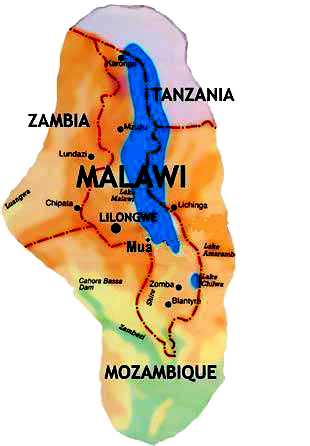 Already in January, the Rural Basic Needs Basket indicated that the average daily calorie intake for rural areas of Chikwawa, Dedza, Zomba and Lilongwe was at an average of 1169kcal; which is 1231kcal below the daily recommended calorie intake of 2400kcal by WHO and the situation was worse in Kasiya-Lilongwe, which stood at 970kcal per person per day. For the Urban Basic Needs Basket, the average cost just for the basic food items stood at MK77, 320 for Blantyre Lilongwe, Zomba, Mzuzu, Karonga and Mangochi; the highest was in Zomba at MK86, 783.
What this entails is that there are indications that many people in the country cannot afford a dignified life and others are trapped in dire poverty. So instead of denying these facts the country needs to wake up and do something about this dire situation. Instead of being angry at these reports the country needs to be angry enough to do something about it, so that it would no longer be defined as such in the near future.
Let us start with the current disaster in the lower Shire. Each year flood disasters occur in this region. There is need for proper planning and political will to manage it. It must be remembered that disaster risk reduction benefits the poor more than disaster management does. Many research reports in countries like India have shown that for every dollar invested in disaster risk reduction, between two and four dollars are returned in terms of avoided or reduced disaster impact costs. The country needs to increase investment in disaster risk management and climate change mitigation measures, such as canalization, winter cropping and IGA interventions as an effective ways to reduce the disaster vulnerability of the poor and thereby improve overall economic development. Invest in social services that improve social conditions, such as universal education, health, access to water and sanitation, thereby reducing the vulnerability of the poor and improving their capacity to respond to, cope with and adapt to disaster and poverty impacts more effectively. Surprisingly or not, those who were angry with the report were not the poor too busy to survive, but rather those who somehow work towards the eradication of poverty. Should they not also need to ask the question whether the Gross Domestic Product is divided among all Malawians with some degree of equity?
 By Fr. Romaric Bationo, M.Afr
The latest FENZA book “Unseen World” by Bernhard Udelhoven was launched to great compliments at an event organised and hosted by FENZA on Friday 27th February 2015. The book launch attracted good number people; well-wishers, friends and partners of FENZA. Among other attendants, there were the archbishop of Lusaka, Bishop Telesphore Mpundu; the German Ambassador to Zambia, his Excellency Mr Bernd Finke; the ZEC secretary general, Fr Zulu; the secretary of the Apostolic Nuncio, Fr Marco Formica; the National Pastoral Coordinator, Fr Justin Matepa; and the Provincial of the M.Afr in Southern Africa, Fr Christopher Chileshe.
Radio Yatsani represented by its director, Fr Singini, was there to record the event for a later broadcast.
 The featured speakers were Bernhard Udelhoven the author of the book, Fr. Thomas Banda, the Diocesan pastoral coordinator for Lusaka archdiocese, and Chuma Peter Mfumu, one of the “Fingers of Thomas”. Fr Bernhard explained succinctly how the book came about and its contributors. Fr Thomas spoke powerfully of the book. He commented that the book makes the case for urgent pastoral intervention gives hope and provides pastoral insights to deal with cases of witchcraft, Satanism and spirits possessions. He concluded with a glowing tribute to the book as sensible and a “must-read”.
After the interventions of the panelists, the audience was given the opportunity to comment on the book or ask questions. Many shared their experience and struggle to come to term with the issue of witchcraft. Others expressed their happiness that the book will elucidate the overwhelming issues of witchcraft and Satanism. Most of them congratulated Bernhard and FENZA and commended the book as timely. As the observations of participants sparked off a lively discussion, Mr Denis Wood, a contributor to the book urged all to buy it, read it, use it and promote it.
 Several copies of the book were sold out, picked like hot cakes even before the opening of the launch. At the end of the launch many of the participants complimented FENZA for a memorable event. Of this book launch, Fr Bernhard commented that it was “FENZA at its best”.
“Unseen Worlds” is available at FENZA, in the Catholic Bookshop of Lusaka and soon it will be available in other bookshops at K80. You can also buy it online at www.fenza.org


Aujourd’hui, les Missionnaires d’Afrique de l’Ouest vous proposent de visiter de nouvelles pages sur leur site www.mafrwestafrica.net :
Dans la rubrique « Actualités » :
« Le Pape François en ce début d’année 2015 », notre Pape continue à être très actif, que ce soit au Vatican ou ailleurs. (lire la suite)
« Vingt nouveaux cardinaux» la création de 20 cardinaux avait été annoncée. C’est le 14 février qu’a eu lieu la célébration. (lire la suite)
« Lettre de Laghouat-Ghardaia février 2015 » écrite par Monseigneur Claude Rault, Missionnaire d’Afrique et évêque de ce diocèse d’Algérie (lire la suite)
Dans la rubrique « Témoignages » :
« Vivre le Carême en 2015» : deux textes proposés à notre réflexion pour ce temps privilégié de l’année. (lire la suite)
« Lien entre famille et vie consacrée », ce qu’en pense un autre Missionnaire d’Afrique, qui vit la mission au Mali : le Père Otmar Strzoda. (lire la suite)
« Des nouvelles de Kaya au Burkina », la lettre envoyée par l’abbé Eloi Bamogo, curé de Kaya, à l’occasion de la nouvelle année 2015.(lire la suite)
« Deux livres de Missionnaires d’Afrique » qui viennent de paraître, l’un sur les plantes en Afrique de l’Ouest, et l’autre sur la compassion (lire la suite)
Dans la rubrique « Dialogue interreligieux » :
« Qui prend mari prend pays », un article sur le site du Centre Foi et Rencontre à propos du voyage des étudiants à l’IFIC à l’intérieur du Mali. (lire la suite)
« Qu’est-ce que l’Islam radical ? » quelques articles pris sur le site ARCRE qui tout en éclairant sur le possible extrémisme, montrent aussi que des positions modérées existent bel et bien (lire la suite)
Dans la rubrique « Justice et Paix » :
« Timbuktu », film franco-mauritanien qui n’avait pas obtenu grand chose au festival de Cannes vient de remporter le titre de meilleur film des Césars 2015. Pour en savoir plus sur le film lui-même… (lire la suite)
« Discrimination en Europe » quelques articles pris sur le dernier bulletin de l’ARCRE du 26 février 2015, en particulier à propos de la migration.(lire la suite)
Dans la rubrique « Vu au sud, vu du sud » :
« Eduquer des citoyens responsables » un texte dans Voix d’Afrique n° 105 du mois de décembre 2014, écrit par une équipe de SMNDA, au Ghana. (lire la suite)

