Author: Missionaries of Africa - Southern Africa Province (SAP) Page 95 of 113

Belias Kanduna RIP

Dear All,
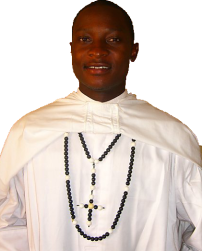
Joseph_MakokaI have just received the sad news that Joseph Makoka‘s grandfather, Belias Kanduna, died last night.  He passed away in Dedza Hospital after a short illness.
The burial and funeral Mass will take place today (18th July) at 12:00 noon at Dedza Sawmill. May Belias’ soul rest in peace.
Please keep Belias, Joseph, who is currently on home leave in Malawi, and his family in your prayers.
Yours,

Bill Turnbull, Malawi Delegate Superior.

La Radio Chrétienne Francophone R.C.F. Août 2013

Rencontrer l’Afrique – RCF Bruxelles : FM 107.6 sous la direction du P. Jan Lenssen M.Afr en collaboration avec l’équipe du Centre Amani, Pastorale Africaine.
Horaire des émissions :
Mercredi : 19h30 – Jeudi : 4h30  et  16h00 – Samedi :  19h30 – Dimanche: 17h00
– Info : info@rcfbruxelles.be
RCF Bruxelles– Pour écouter RCF Bruxelles partout dans le monde, a l’heure même de l’émission: www.rcfbruxelles.be
Vous pouvez réécouter les émissions de la semaine dernière en «podcast» sur le site de RCF: 
http://www.rcfbruxelles.be/-Podcast-.html
Les prochaines Émissions : mois d’Aout 2013
07.08.2013 : P. Jean Pierre Bondue M.Afr. Un pays dans la tourmente : le Mali. Écartelé par l’opposition entre des groupements musulmans, le pays est ballotté entre les défis de ceux qui y trouvent un terrain du combat de l’avenir,  avec des options soit disant religieuses. Un regard de discernement et de solidarité.
14.08.2013 : Les joies et les peines des personnes âgées parmi nous, surtout ceux issues de l’immigration Africaine. Immigrés provisoires ils ont du se décider à rester comme hôte permanent dans une société qui n’est jamais devenue la leur. Les difficultés des seniors de trouver accueil, dans leur famille traditionnelle – qui a dû s’adapter au rythme et aux exigences modernes – ou dans les services publiques et les maisons d’accueil des personnes âgées en Belgique, si « étrangères » dans leur culture traditionnelle.
21.08.2013 : Mgr Banga, Évêque de Buta, Vice-Président de la Conférence des Évêques de l’Église du Congo. L’Église Catholique dans le cadre du Congo RDC., au-delà des difficultés politiques.
28.08.2013 : P. W. Neven et Mgr W. Ngumbi, Évêque de Kindu RDC. La campagne anti-esclavagiste du Cardinal Lavigerie à la fin du XIX siècle, et les combats de justice actuels en Afrique : Au risque d’un esclavage qui fait peau neuve !

JCTR urges government to tackle escalating cost of food

JCTR LusakaPress Release, 9th July 2013

JCTR urges government to tackle escalating cost of food

In May 2013, government sequentially scrapped off fuel and maize subsidies contending that the measure would free resources for infrastructure development and poverty reduction among others. This change in subsidies has generated a debate with various actors voicing varying views.

At household level, the effects of the subsidies removal on prices of basic commodities are still being felt two months afterwards. According to Daniel Mutale, Social conditions programme manager, ‘‘the effects of removal of subsidies on basic food items are deepening.’’ This calls for an urgent response to address the rising food costs. READ MORE

COST OF BASIC FOOD ITEMS FOR A FAMILY OF FIVE IN LUSAKA

Be aware of human trafficking during UNWTO – UNICEF Expert

Livingstone, July 14 2013
unicef-logo.jpgUNICEF Child Protection Officer Edwin Mumba says it is disappointing that most Zambians remain ignorant on the dangers and gravity Human Trafficking posses on society. And a representative from Justice and Peace, Sister Lynette Rodrigues, says there was great demand for commercial sex nowadays which many vulnerable women were ready to engage in regardless of the consequences. Mr. Mumba has noted with concern that due to poverty and vulnerability of various groups, it was easy for unscrupulous individuals to traffic unsuspecting citizens within and outside Zambia.
UNWTOHe for this reason cautioned Livingstone residents to be wary of such individuals ahead of the The United Nations World Tourism Organization (UNWTO) General Assembly to be co-hosted between Zambia and Zimbabwe. “These unscrupulous people would use the UNWTO summit it as an opportunity to traffic unsuspecting Zambians,” he said.
Lusaka_VoiceZambia News and Information Services (ZANIS) reports that UNICEF Child Protection Officer said this today during a stakeholder’s workshop on Human Trafficking ahead of the UNWTO General Assembly, organized by the Catholic Diocese of Livingstone. He said the tourist capital would have an influx of people from different parts of the world during UNWTO General Assembly and as such, precautions had to be taken to protect Zambians, especially children and the youths, from being trafficked.
Mr. Mumba stated that human trafficking was a major challenge for the country as Zambia was a source, transit and destination for human trafficking victims. “Many of you may not be aware but men, women and children are trafficked to, through and within Zambia,” he said.
He however, commended government for its response to the vice such as formulation of the Anti-Trafficking Act Number 11 of 2008 and the establishment of the Inter-Ministerial Committee on Human Trafficking. Mr. Mumba emphasized the need to prevent human trafficking as it was almost impossible to retrieve people once they were trafficked due to weaknesses in the country’s legal system.
Meanwhile, a representative from Justice and Peace, Sister Lynette Rodrigues, says there was great demand for commercial sex nowadays which many vulnerable women were ready to engage in regardless of the consequences. “There is great demand for commercial sex and people are ready to supply regardless of the consequences…that is the reality of our world,” she said.
Sister Lynette lack of statistics underplayed the extent of human trafficking in Zambia. Sr. Rodrigues cited porous borders, poor implementation of laws and the country’s economic status as factors that hindered the fight against human trafficking.

Contemporary slavery: a modern scourge

P1090116In 1888 Cardinal Lavigerie the founder of the White Fathers joined the worldwide campaign for the abolition of the slave trade. Tirelessly he travelled to many European cities, raising awareness to wipe out all types of slavery. While commemorating this event, his missionaries, together with all people of good will, now have to fight all new forms of servitude and bondage imposed on human beings
By Felix Phiri M.Afr.
Published in the Saturday Post, Saturday 13 July 2013
The Missionaries of Africa (popularly known as the White Fathers) first set foot on Zambian soil, at Mponda in Northern Zambia, in 1889, the first Catholic missionaries to do so.
They were founded in 1868 by Cardinal Charles Lavigerie while he was Archbishop of Algiers (1868 – 1892) to spread the Gospel on the African continent and to enter in dialogue with Islam.
Although Lavigerie never travelled South of the Sahara himself, he was well informed about the realities encountered there by his missionaries. They covered matters of evangelization and the dehumanizing scourge of slavery, ravaging many parts of Africa.
In tune with the wave of anti-slavery campaigns around the world at that time, Lavigerie made a singular contribution to raising awareness about the detrimental effects of slavery through eloquent and powerful speeches made in the main European capitals like, Rome, London, Paris and Brussels, On 23rd December 1888, in Chiesa del Gesù (a Catholic Church run by the Jesuits, in central Rome), he made the following two poignant declarations:
“Slavery, as it is practiced in Africa, is not only, indeed, contrary to the Gospel, it is contrary to natural law. Natural laws do not concern Christians only, they involve all humanity. That is why I am appealing to everyone, without distinction of nationality, party or religious creed. I do not address myself simply to faith, but to reason, to justice, to respect, to love of liberty.”
Lavigerie added: “I am a man, and nothing human is foreign to me. I am a man, and injustice towards others revolts my heart. I am a man, and oppression offends my nature. I am a man and what I would like people to do is to restore to me, freedom, honour and the sacred bonds of family, I want to restore to the sons and daughters of this unhappy race, family, honour and freedom.”
 More than a century has passed since the time when Lavigerie undertook his crusade against the most abominable form of slavery of his time. At the occasion of the 125th anniversary of his anti-slavery campaign, members of the missionary congregation he founded, the White Fathers, are, not only commemorating his ant-slavery campaign initiative world-over but also want to rekindle the fire he ignited, in order to highlight and combat modern forms of slavery which continue to deny and deprive people of their dignity and their right to self-determination even today
Through their long presence in Zambia, the White Fathers have always been attentive to the spiritual and social welfare not only of the Catholic communities but also of all Zambians.
Joining the initiatives of their fellow missionaries inside and outside the African continent on this occasion and in their continue pastoral concern for justice and the promotion of human dignity, they would like to engage in a debate with the Zambian society, highlighting issues that border on modern forms of slavery, some of which are manifest and others which tend to escape the uncritical public eye. That is one of the main purposes of a series of articles which will be published weekly in these columns.
Next week’s article will take a look at the situation encountered by the Missionaries of Africa upon their arrival in Northern Zambia in 1891.
For your comments, queries and contributions please write to antislavery2013@gmail.com
For further information: http://mafrsaprovince.com/antislavery-campaign/
NOTE
Many people think of slavery and enslavement only as something of the past, it isn’t. Not only are we still living with the legacies of historical slavery, but millions of women, children and men around the world are trapped in slavery, TODAY. Zambia is both a source, transit and destination country for men, women and children subjected to forced labour and forced prostitution. Most trafficking in Zambia occurs within the country’s borders and primarily involves women and children from rural areas exploited in cities in domestic servitude or other types of forced labour.
Zambia is also a destination for migrants from Malawi, DCR, Zimbabwe and Mozambique who are exploited in forced labour or forced prostitution.
If you witness or suspect human trafficking, the first step is to report it to the police. However, if you are unable to contact the police you can call the free 990 Counter Trafficking Talkline, which is a free, a free, confidential service operated by trained counsellors.

Death of Father Réginald Carrière

Réginald Carrière_modifié-1Father Julien Cormier, Provincial of the Americas, informs you of the death of Father Réginald Carrière, M.Afr.

He died on July 13, 2013, in Sherbrooke (Canada), at the age of 91 years of which 61 of missionary life in Zambia, Tanzania, Kenya and Canada.

The funeral service will take place on Friday, July 19, 2013 at 11:00 a.m., at 100 rue  du Cardinal-Lavigerie, Sherbrooke.

Let us pray for him and his family.

Forced labour, human trafficking and modern slavery; three articles from the Saturday Post Online

Human trafficking is modern slavery, says Kapiri DC
By Isaac Zulu in Kapiri Mposhi, Friday 05 Nov. 2010
KAPIRI Mposhi district commissioner Cosmas Musumpuka has observed that human trafficking is a complex phenomenon which involves deception of the potential victims.
21 million trapped in forced labour, says International Labour Organisation
By Mwala Kalaluka in Geneva, Switzerland, Monday 11 June 2012
ALMOST 21 million people are victims of forced labour globally, trapped in jobs into which they were coerced or deceived and they cannot leave, according to a new International Labour Organisation study.
And the ILO says the situation of workers in the occupied Arab territories is extremely worrying and remains precarious.
US estimates 27m victims of human trafficking
By Fridah Nkonde, Saturday 23 June 2012
US Embassy acting public affairs officer Adam Jagelski says an estimated 27 million around the world are victims of human trafficking.
Saturday Post Online Logo ILO

Newsletter South Africa no 28 – May 24, 2013

Newsletter South Africa no 28

Present Magazine May-June 2013

Present Magazine May - June 2013A Newsletter for the Candidates and Students of the Missionaries of Africa

Pape François_modifié-1The Pope to those discerning their vocations             

“You are young people on a vocational journey. You represent the Church’s youth! If the Church is the Bride of Christ, you in a certain sense represent the moment of betrothal, the spring of vocation, the season of discovery … in which foundations are laid for the future. … Today the word of God speaks to us of mission. … What are the reference points of Christian mission? The readings we have heard suggest three: the joy of consolation, the Cross and prayer. (…) READ MORE

Invitation to the priestly ordination of Lowrent Thokozani Kamwaza

Lowrent Thokozani KamwazaI know in whom I have put my Trust, and I have no doubt at all” (2Timothy 1: 12)

In a profound way these words synthesize my missionary vocation journey. The ten years of my initial formation have been in many ways a journey of trust in the One calling me: Jesus Christ. Trust in that voice so deep within me: “Oh! The word of my Lord deep within my being… Before I formed you in the womb I knew you through and through and had called you to be my son.” Everything has been about trust and experiencing the love of God. Trust in those accompanying me and trust in myself that with God’s grace, I respond positively to my sensed call to priesthood as a Missionary of Africa. I pray and believe that this will mark my whole missionary journey: “I know in whom I have put my trust, and I have no doubt at all” (2Timothy 1: 12). Indeed a journey of love and trust in God’s graces that have led me this far in life. I remain grateful to all of you, confreres and friends, who have helped me to experience this trust in the one calling me into his vineyard as a priest of the order of Melchizedeck.

It is on this beautiful note that I invite you all to join me on this wonderful day of my priestly ordination, Saturday 13th July 2013 at Kasina parish of Dedza Diocese in Malawi by His Lordship Bishop Emmanuel Kanyama and thanksgiving mass on 14th July 2013 in my home village Mtenje of Kasina Parish. I look forward to be united with you all in presence and prayers.

Yours fraternally,

Lowrent Thokozani Kamwaza, M.Afr

Page 95 of 113

Powered by WordPress & Theme by Anders Norén